
When a casteist immigrates to the United States, they pack in their caste identity along with its associated caste pride. This baggage of caste is not left behind at the immigration counter but carried all the way to the South Asian community nestled within the foreign land. Why? Because, to them, it is a valuable commodity—a form of generational social wealth—to be deployed at an opportune moment to assert superiority over fellow South Asians who have immigrated with lower-caste identities.
The lower castes were naive to expect a caste-free existence in a foreign land deemed to be devoid of caste and caste-based discrimination. They were in for a surprise when they discovered that caste survives in the sub-zero temperatures of the United States as well, constantly heated to life by the immigrated upper castes. Therefore, the lower castes are seeking protection under the Constitution of the United States and have petitioned the legislature to explicitly outlaw caste in the statutes.
Nobody likes to have their prized possession taken away from them—especially not the upper-caste Hindus. Having mastered the art of whitewashing themselves with claims of belonging to an ancient faith rooted in equality, they are now claiming to have been wrongfully targeted for belonging to a religious minority. Rather than joining the lower castes in their fight to annihilate caste, they defend their heritage by arguing that they have indeed left their baggage of caste at the immigration counter. Did they?
The Persistent Shadow of Caste in the U.S.
The United States is home to approximately 4.8 million Indian Americans, as reported by the U.S. Census Bureau in 2022. For many, caste identities, whether embraced or imposed, remain a persistent feature of their lived experiences. The phrase “If you are a Hindu, you carry the baggage of caste with you” underscores the difficulty of escaping caste hierarchies that have been ingrained over centuries.
Casteism manifests in subtle but significant ways within the South Asian American community. Workplace discrimination, housing segregation, and social exclusion based on caste are not uncommon, often leading to isolation and marginalization of individuals from historically disadvantaged castes. For this reason, activists have long advocated for legislative recognition of caste discrimination as a distinct issue requiring specific legal redress.
Legislative Actions in States and Cities Against Caste-based Discrimination
There have been a total of three legislative actions in different legislative bodies in the United States against caste-based discrimination—one at the state level and two at the city level. California is the first state to pass a bill in its Senate against caste-based discrimination; however, it was vetoed by the governor. Seattle and Fresno are the two cities that have passed bills in their city councils against caste-based discrimination. The current status of these legislative actions is given in the following tables:
| State | Bill | Status |
|---|---|---|
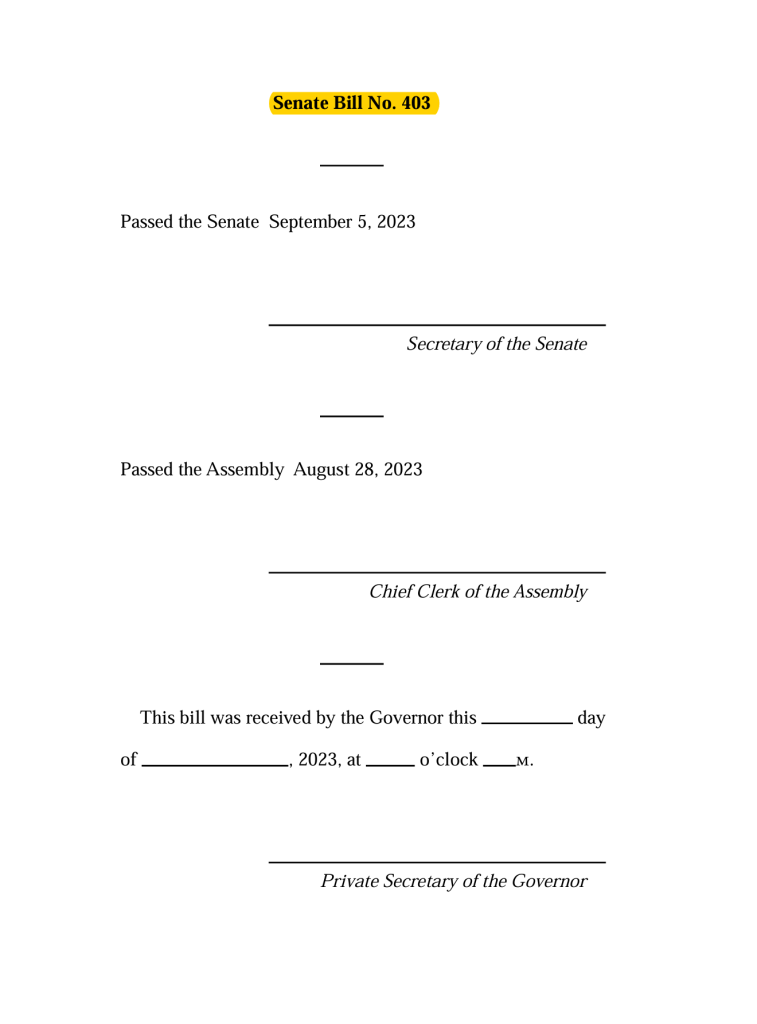
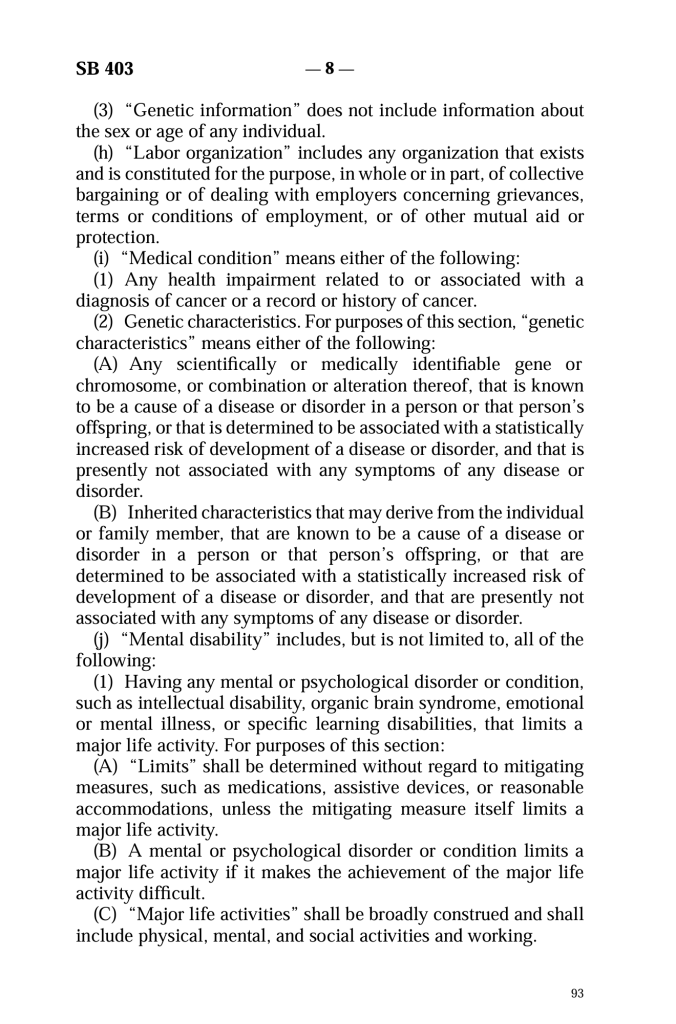
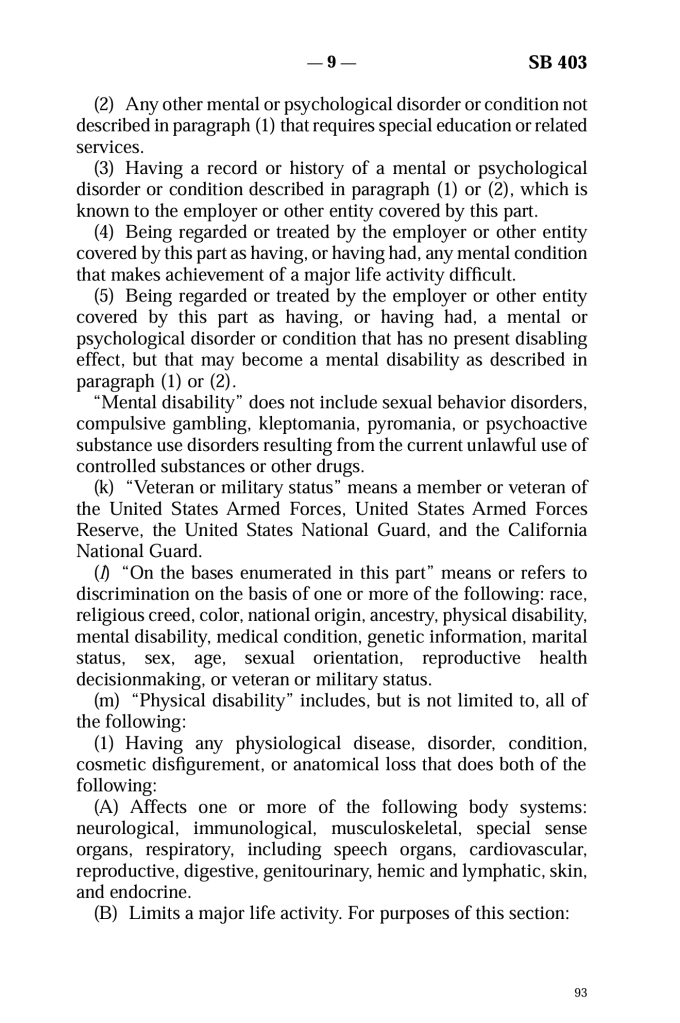
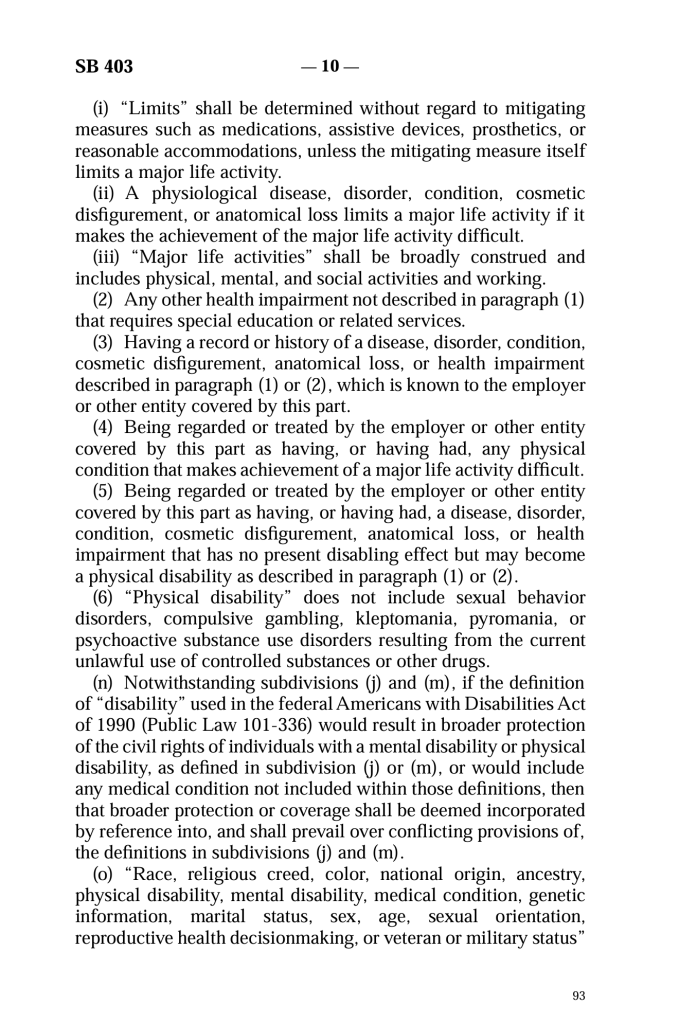
| California | Senate Bill (SB) 403 | • 11 September 2023: Passed by the State Legislature; • 07 October 2023: Vetoed by the Governor |
| City | Bill | Status |
|---|---|---|
| Seattle, WA | Council Bill (CB) 120511; Ordinance (Ord) 126767 | • 21 February 2023: Passed by the City Council • 23 February 2023: Signed by the Mayor |
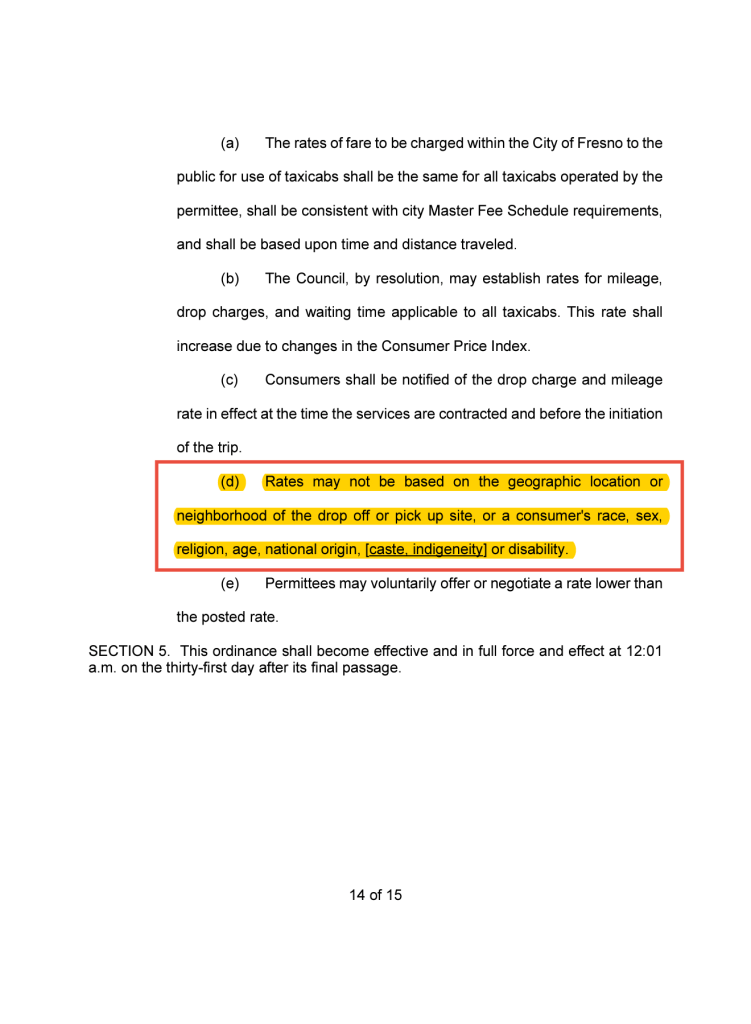
| Fresno, CA | Bill B-27; File ID 23-1395 | 28 September 2023: Passed by the City Council |
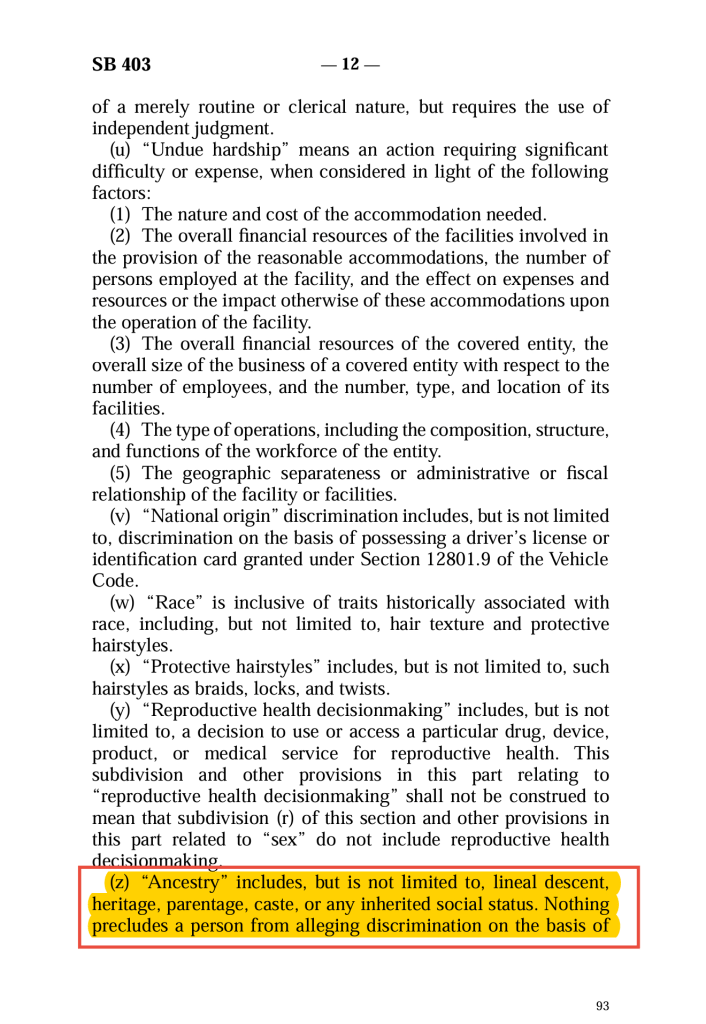
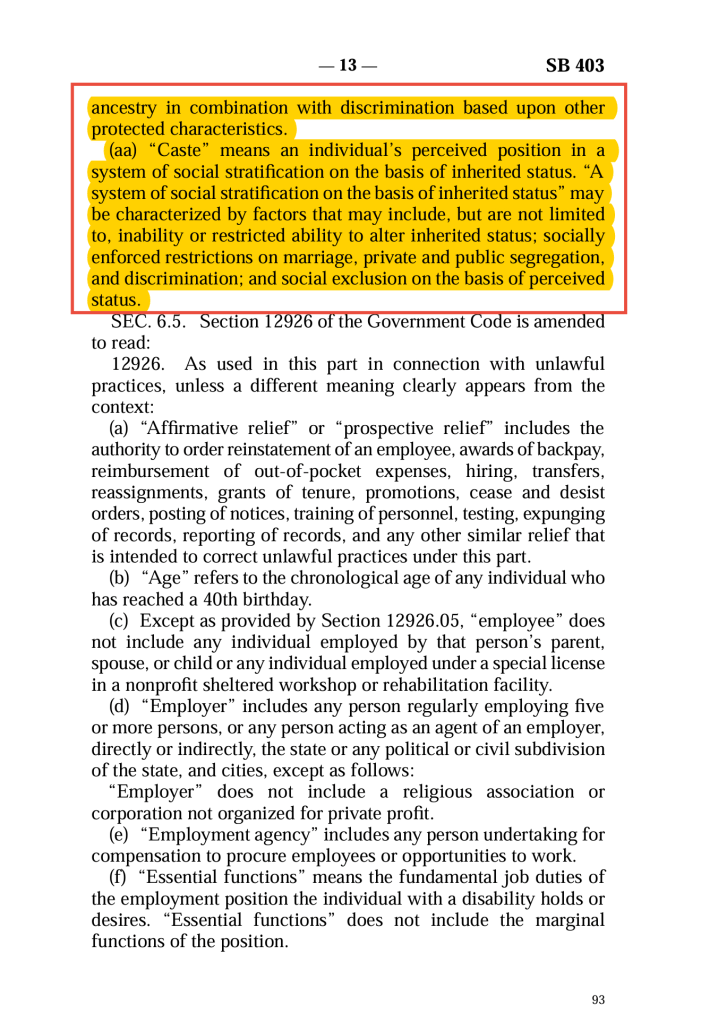
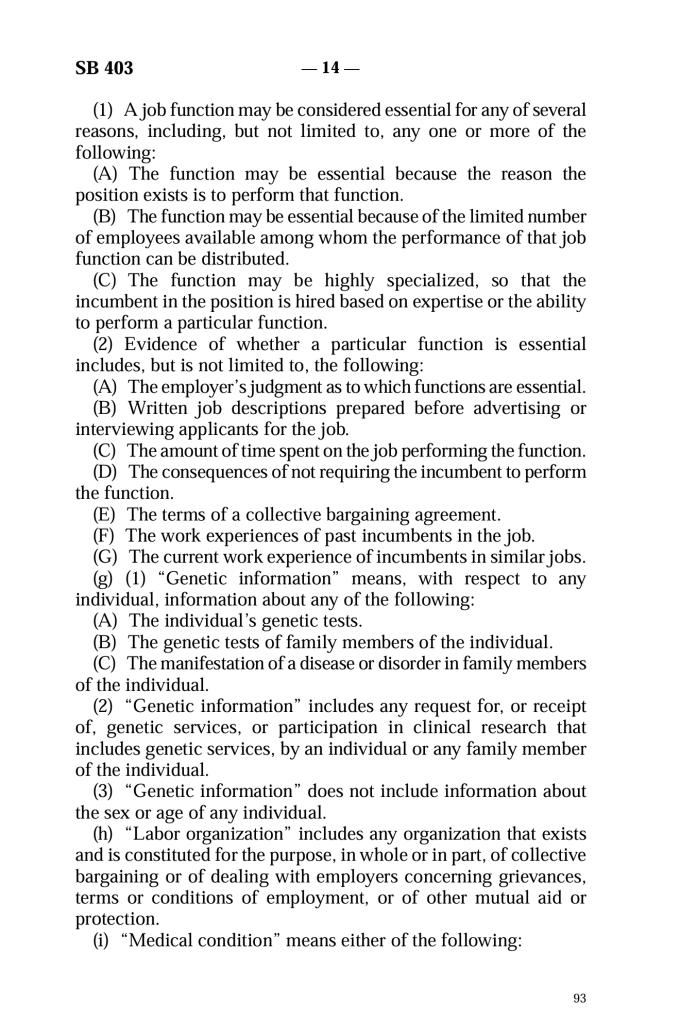
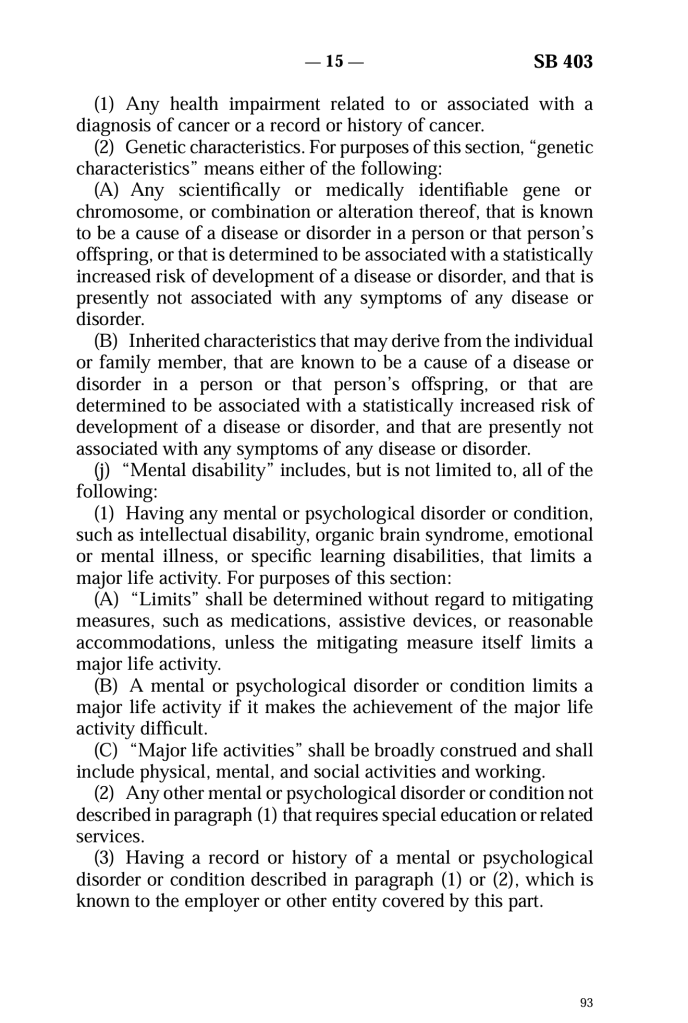
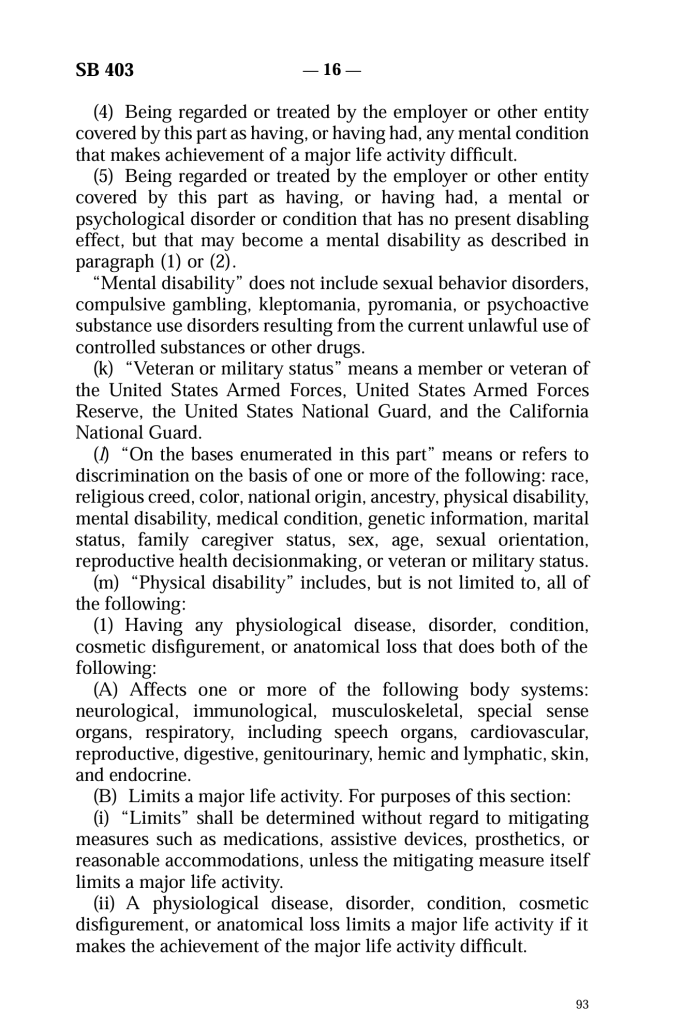
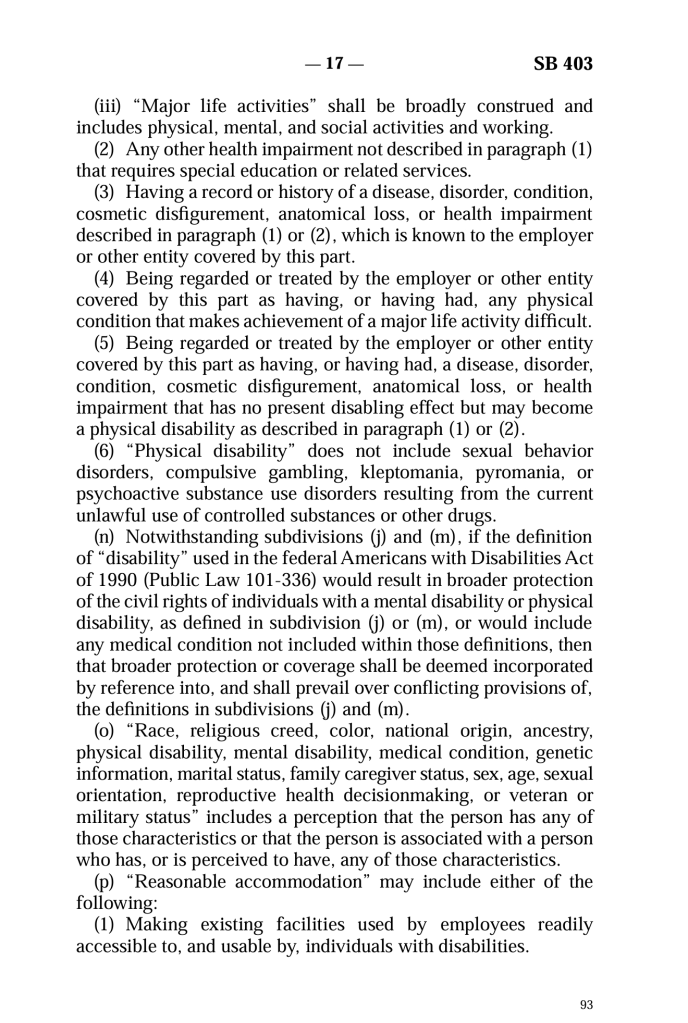
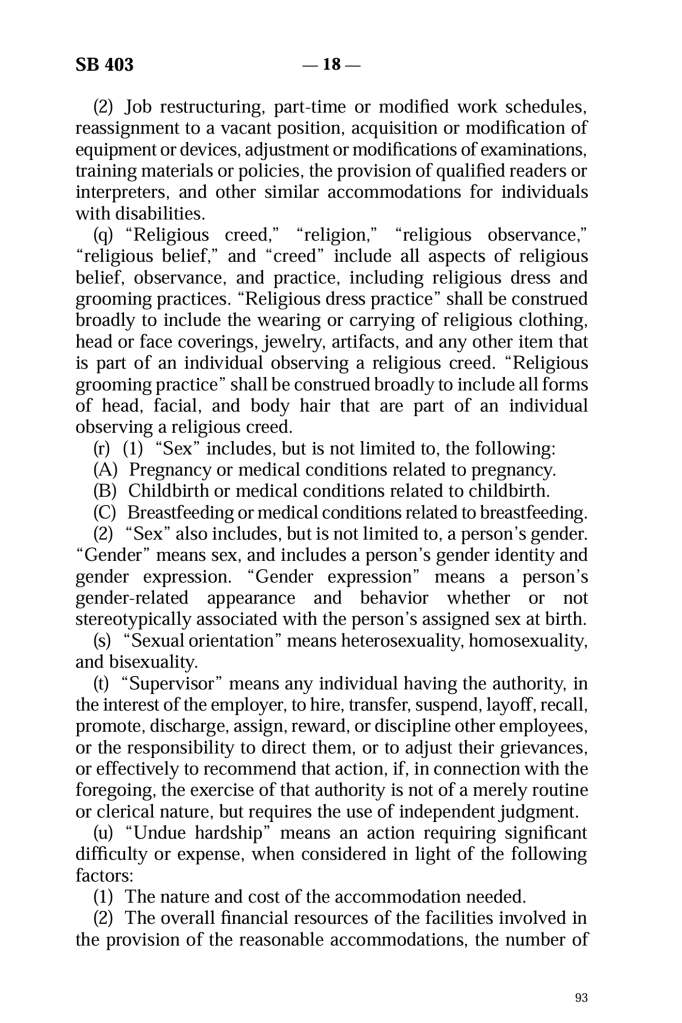
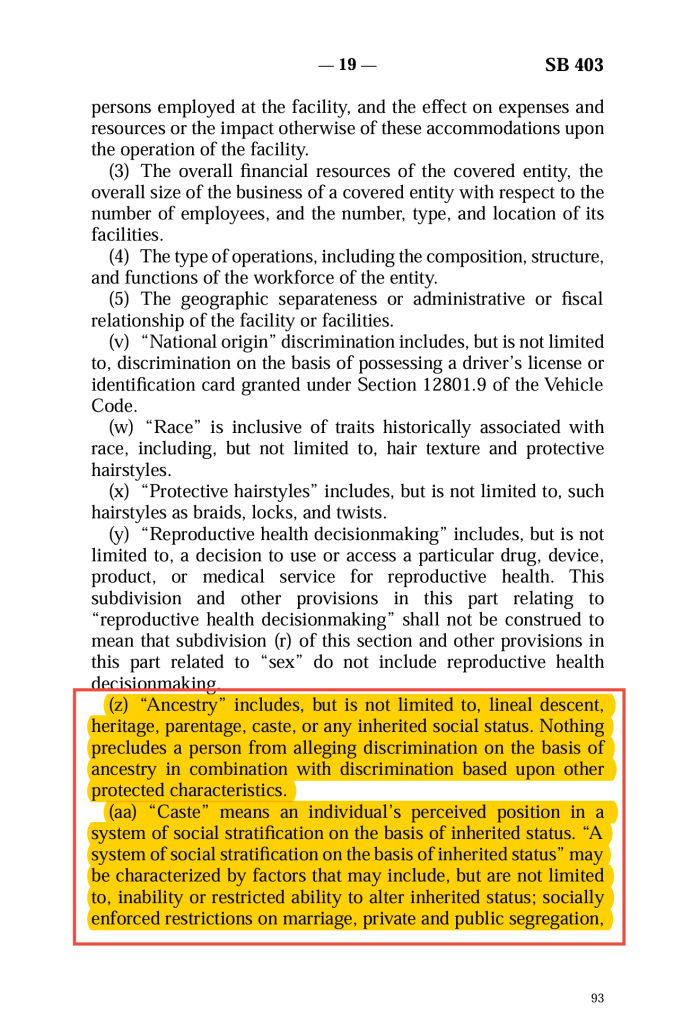
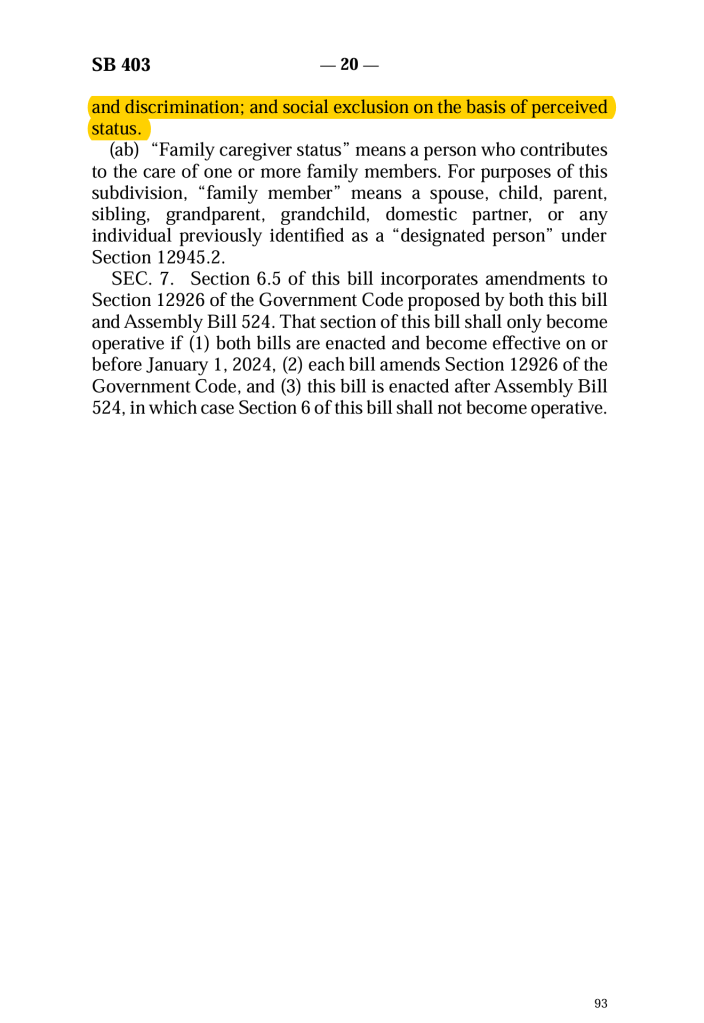
California’s Senate Bill (SB) 403
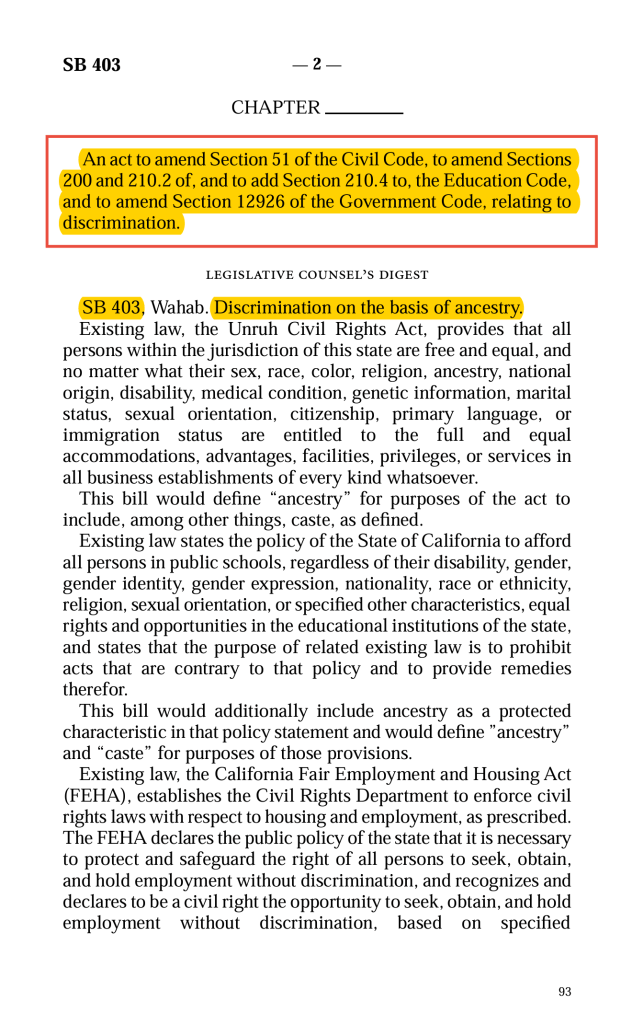
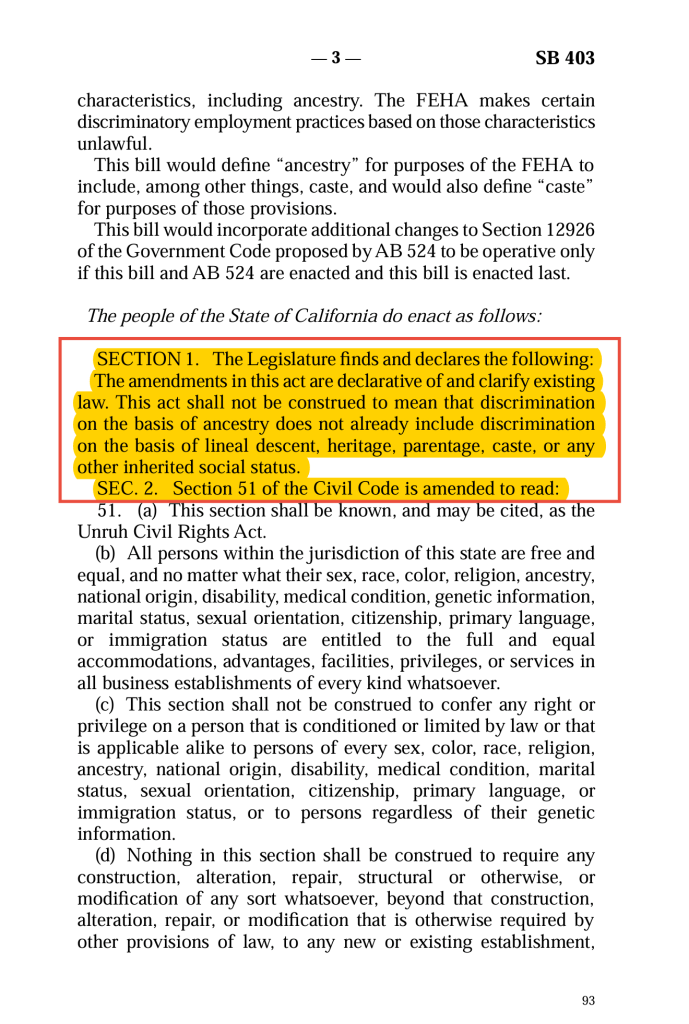
The relevant parts of California’s Senate Bill (SB) 403, where “caste” is explicitly mentioned, are provided in the following slideshow:
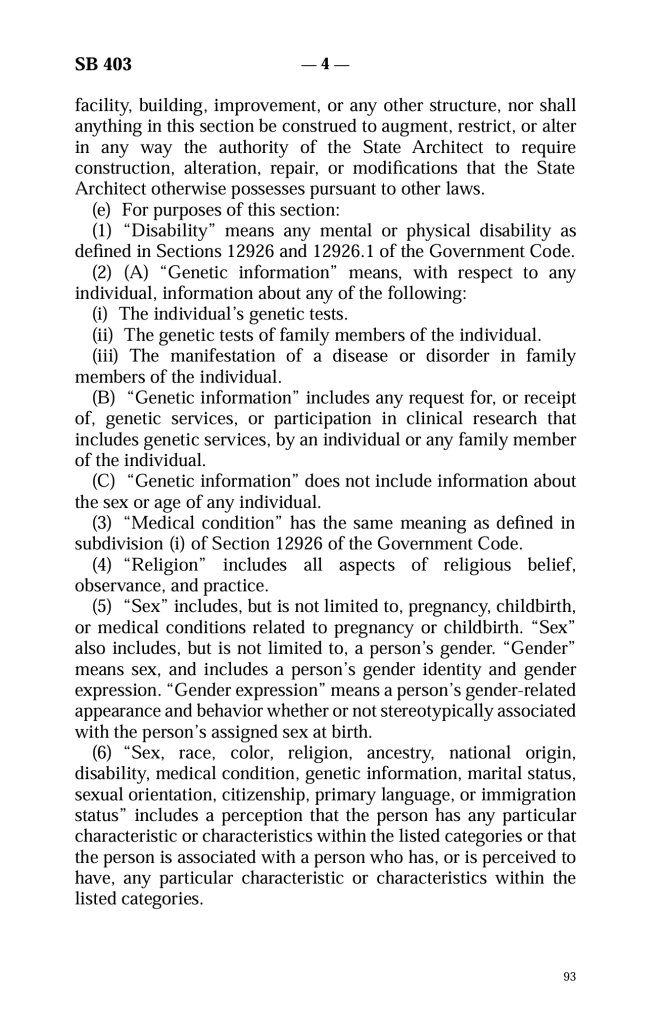
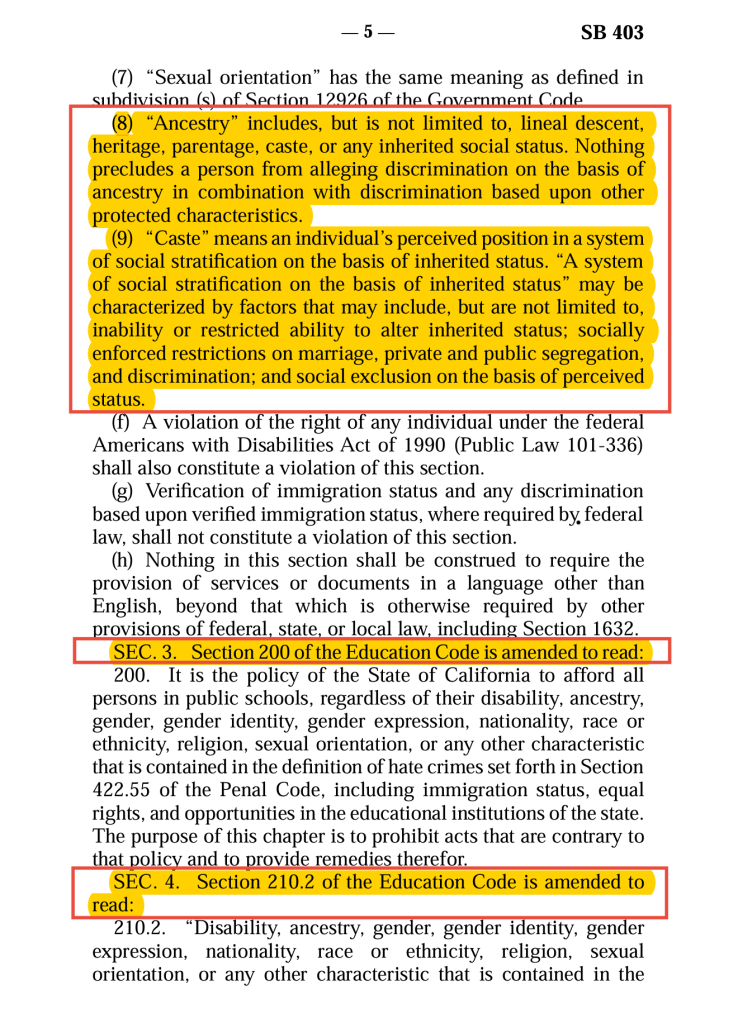
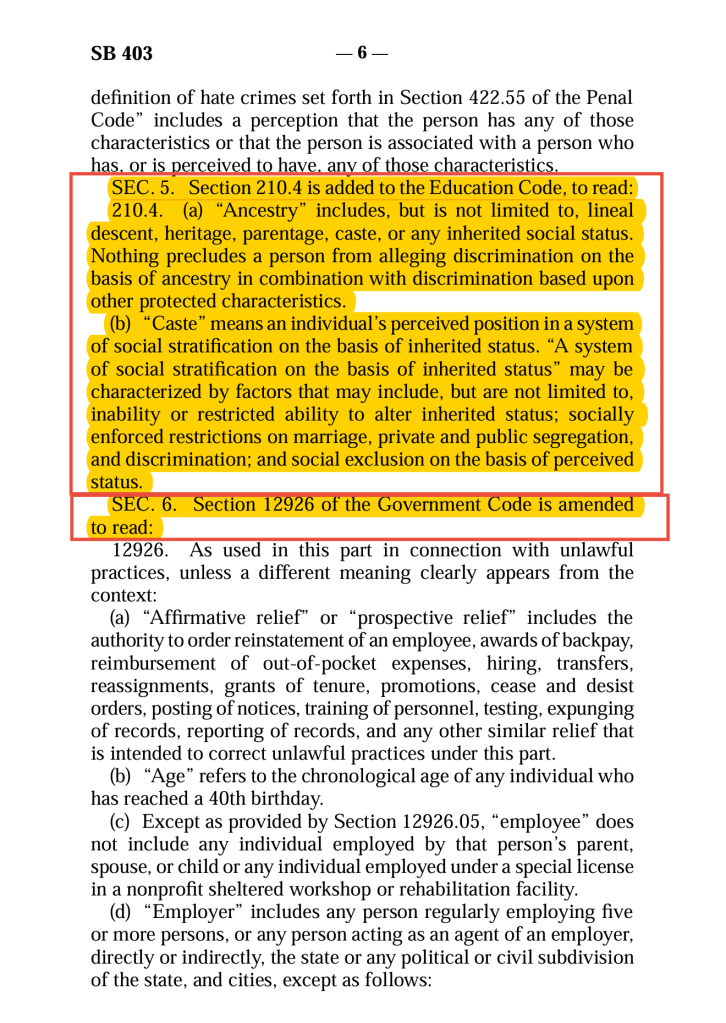
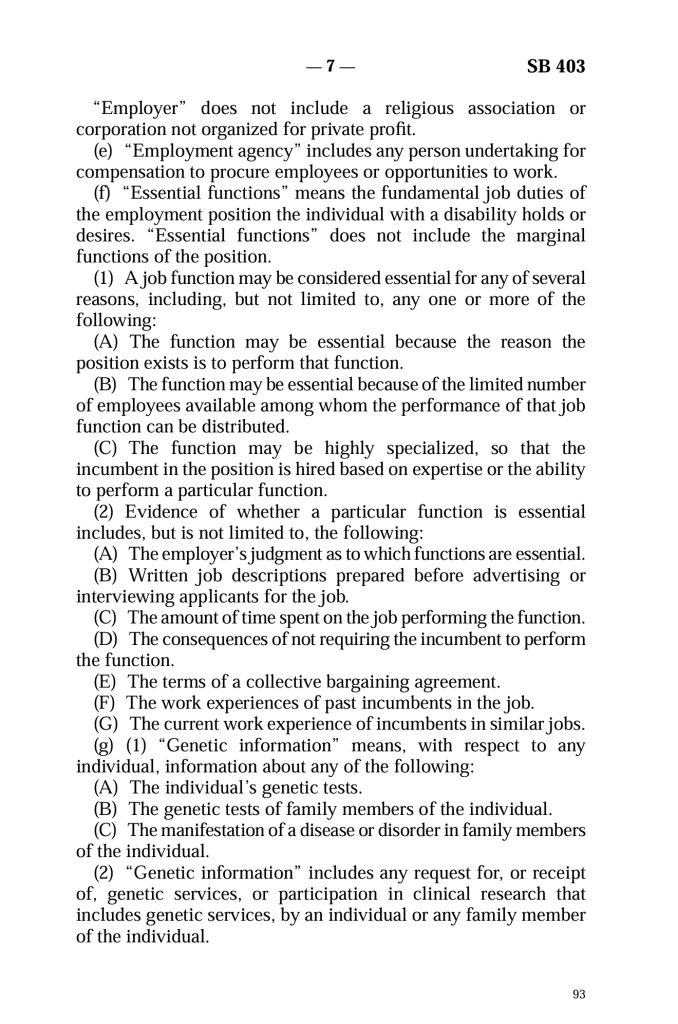

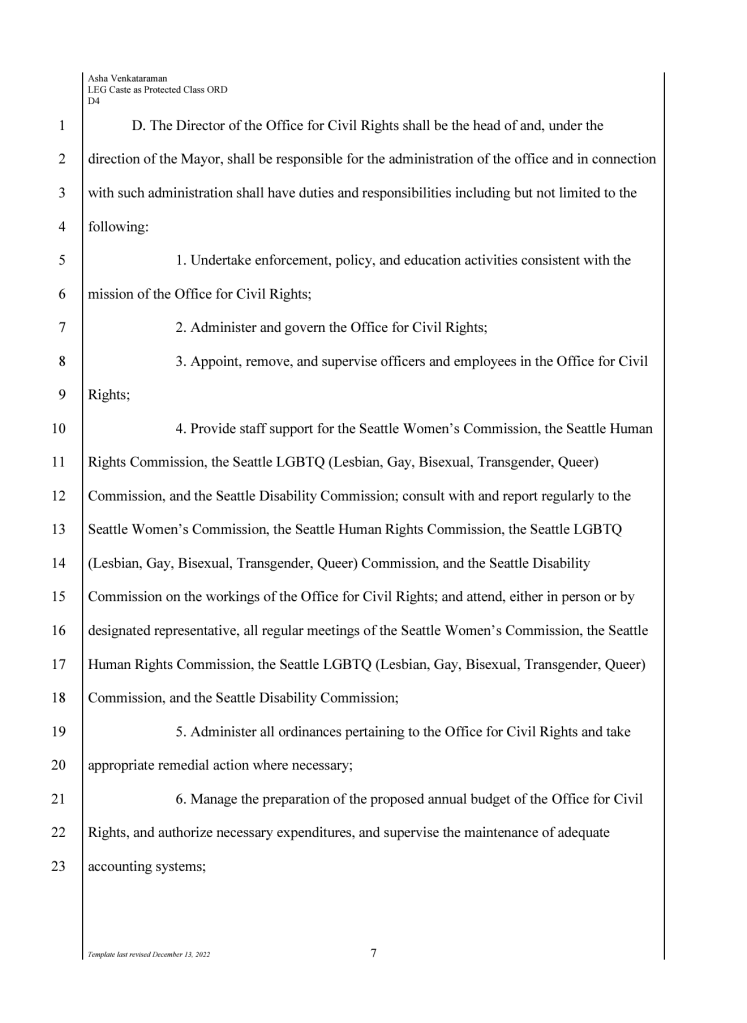
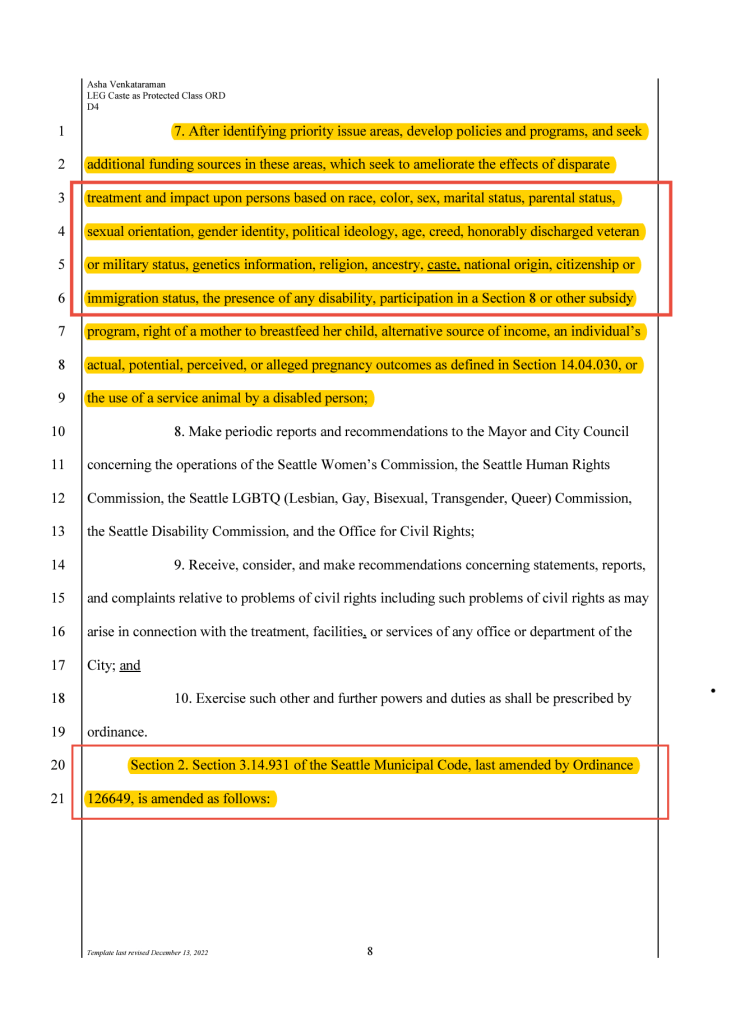
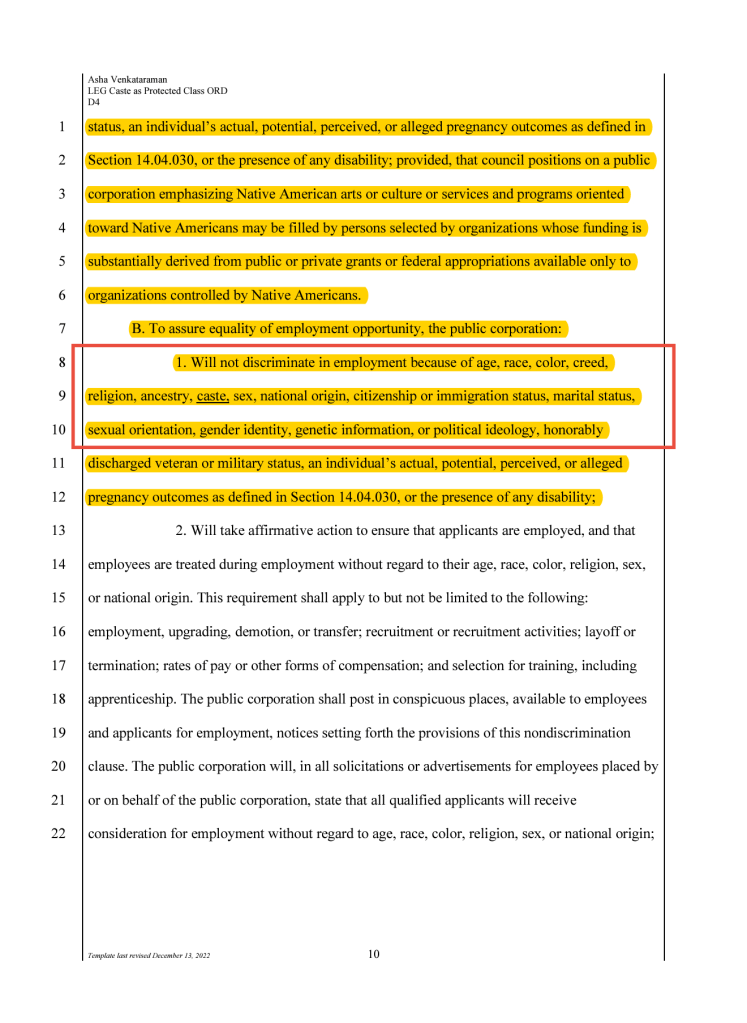
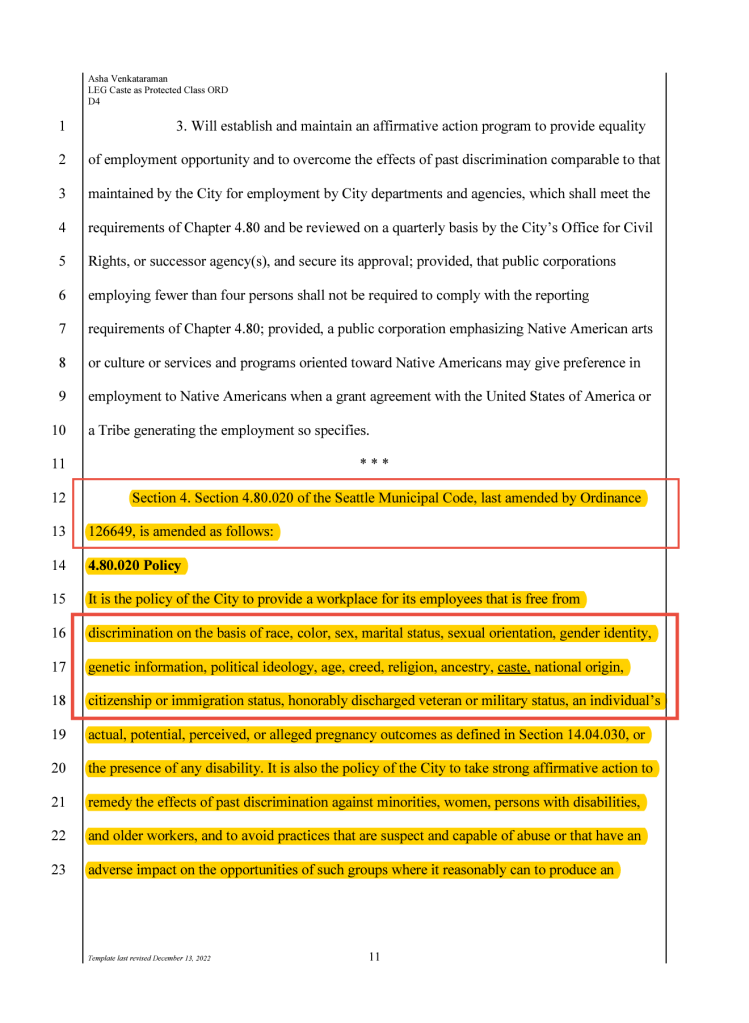
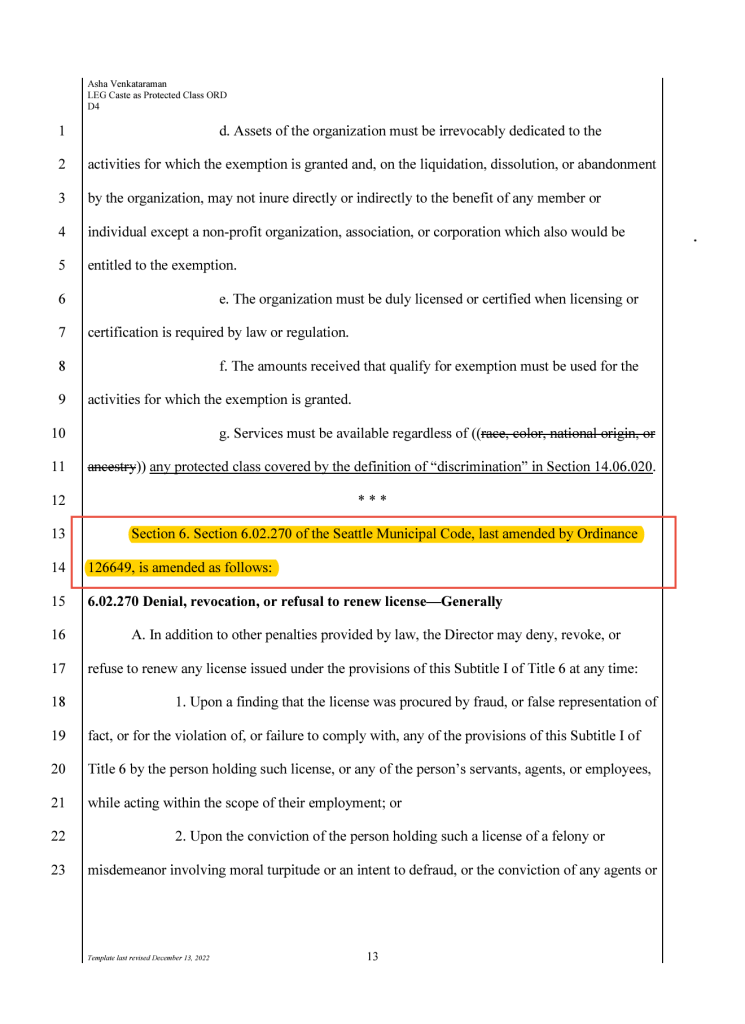
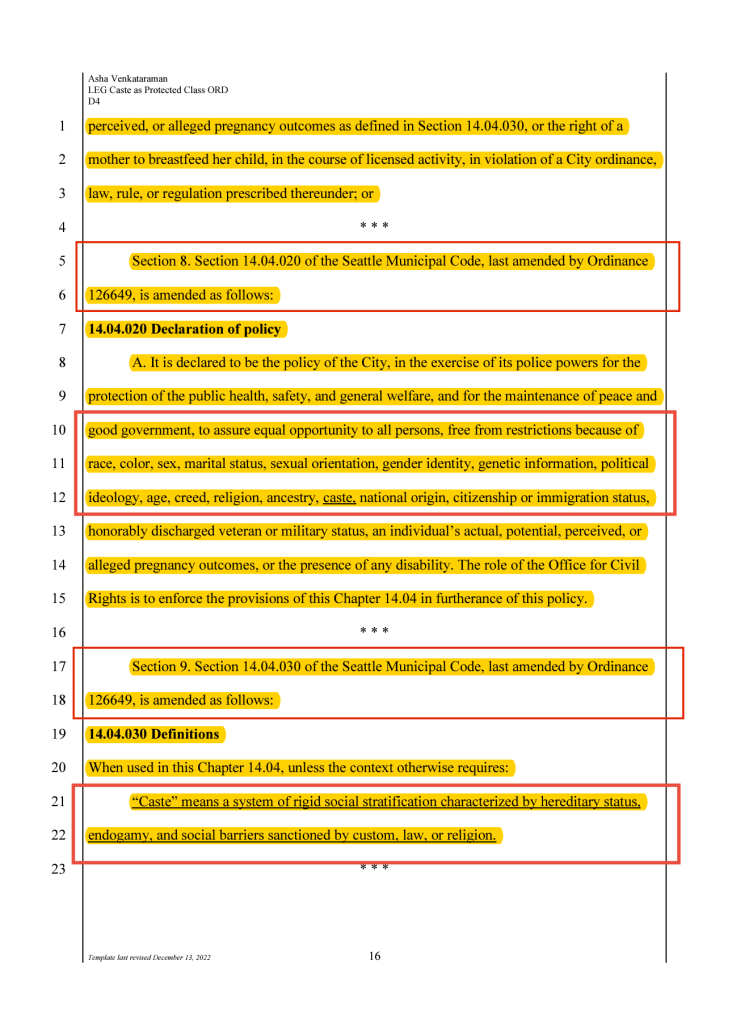
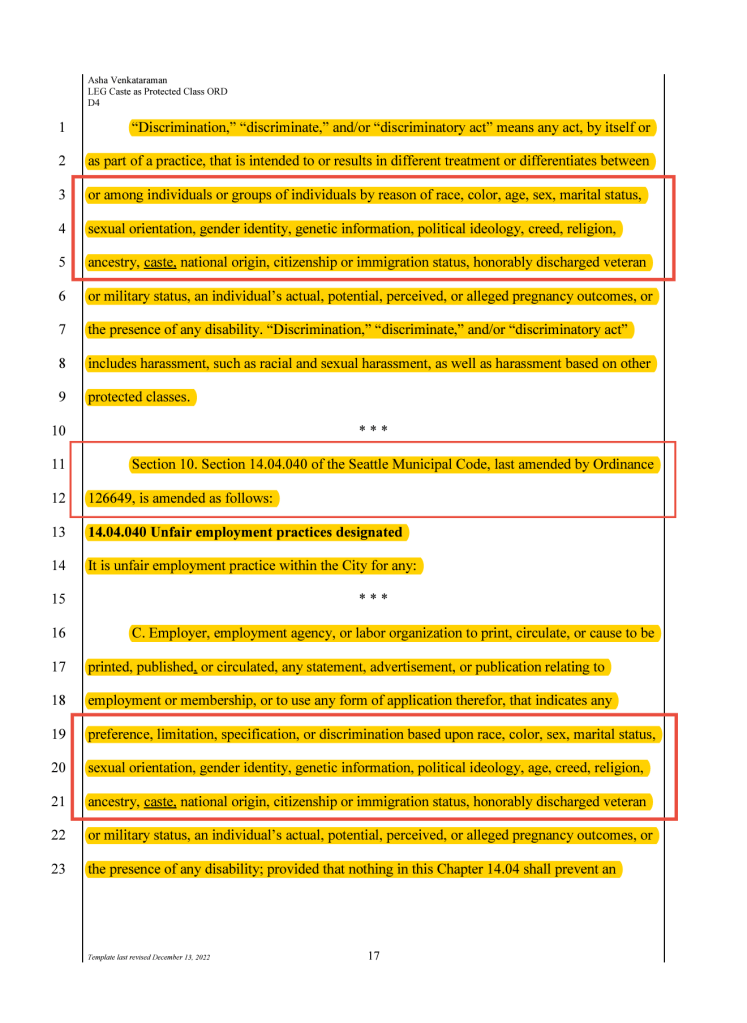
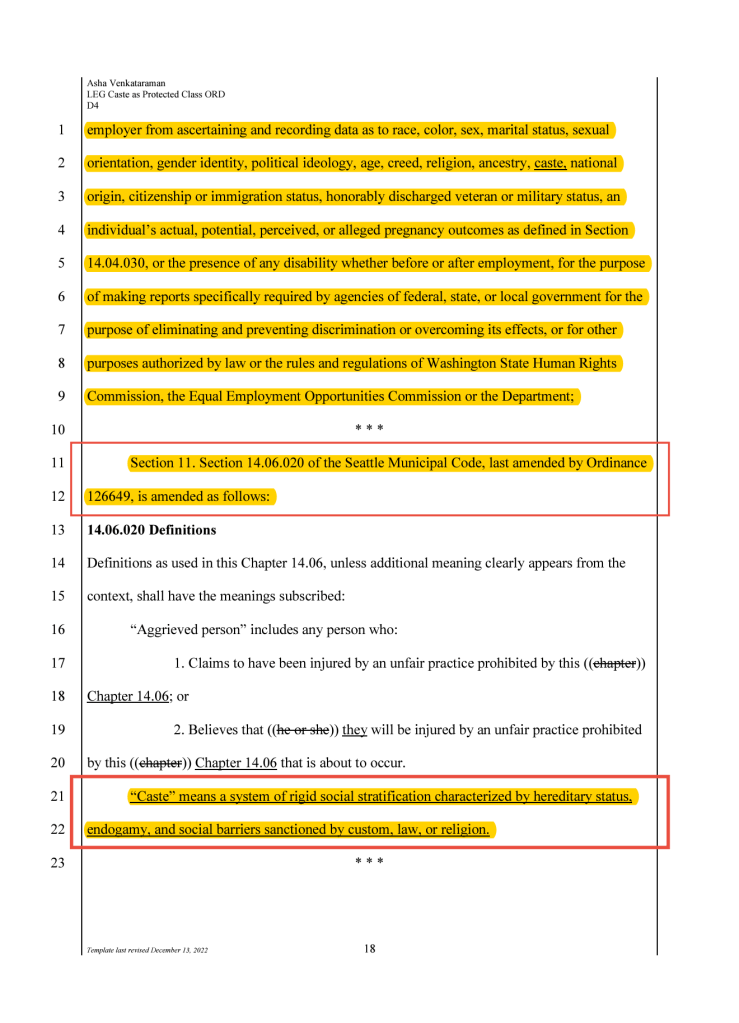
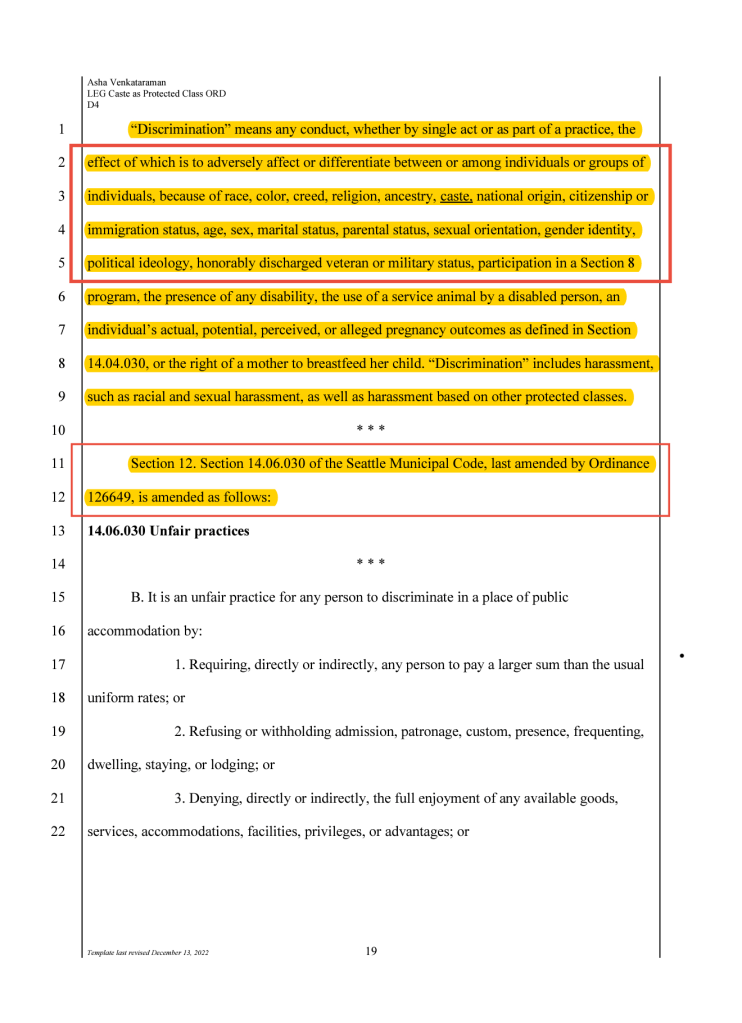
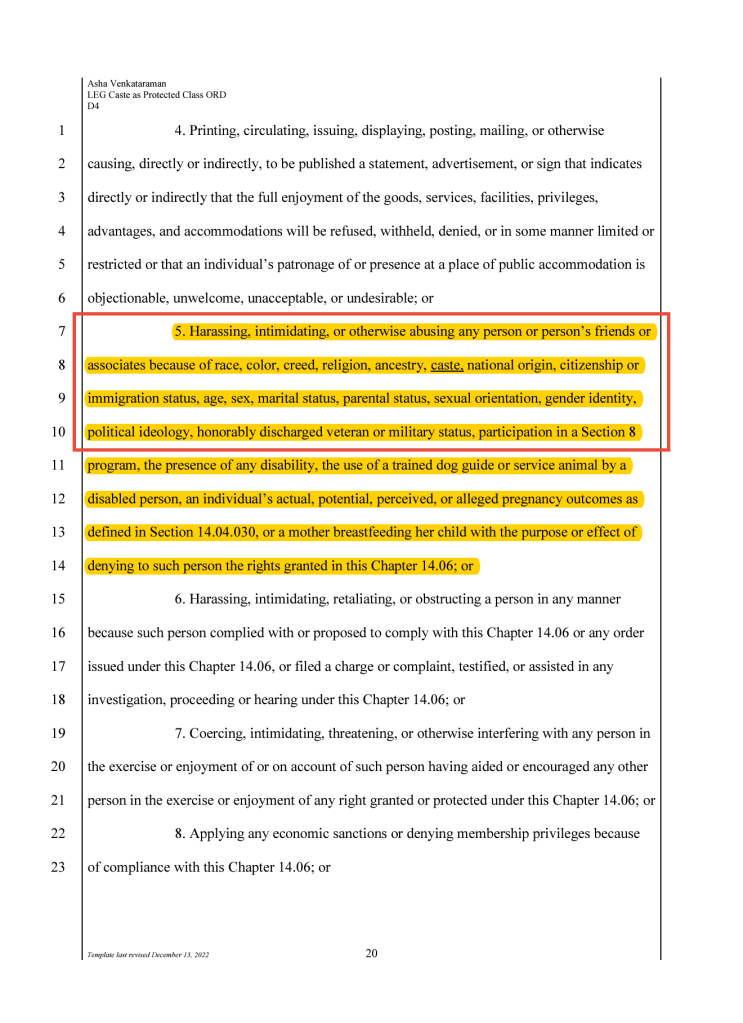
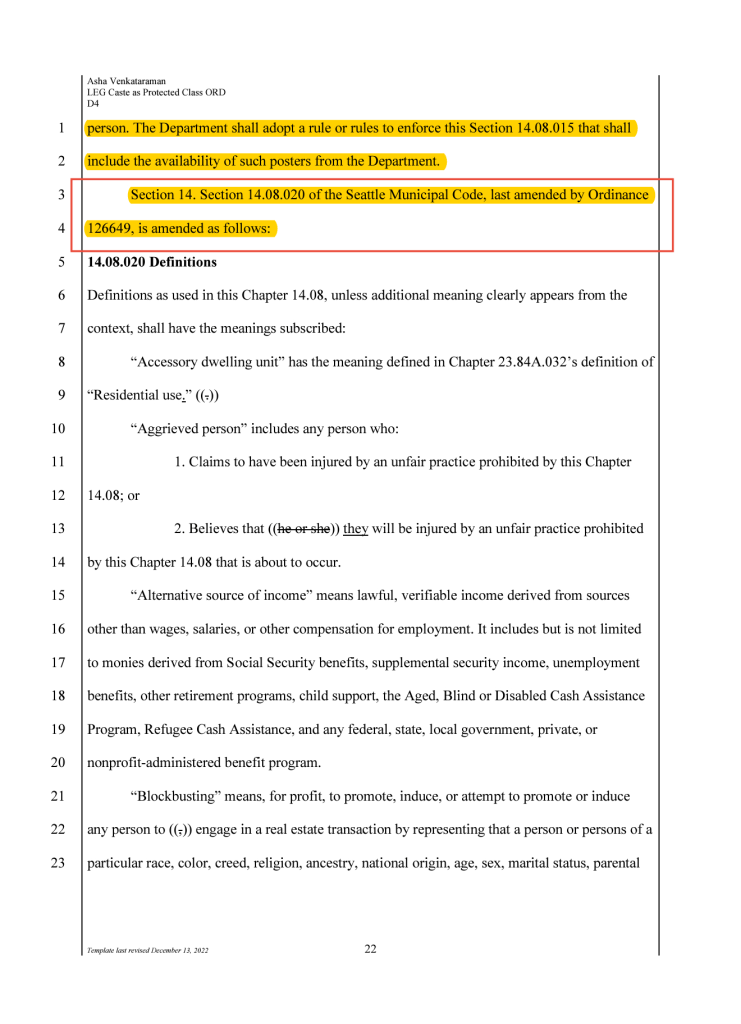
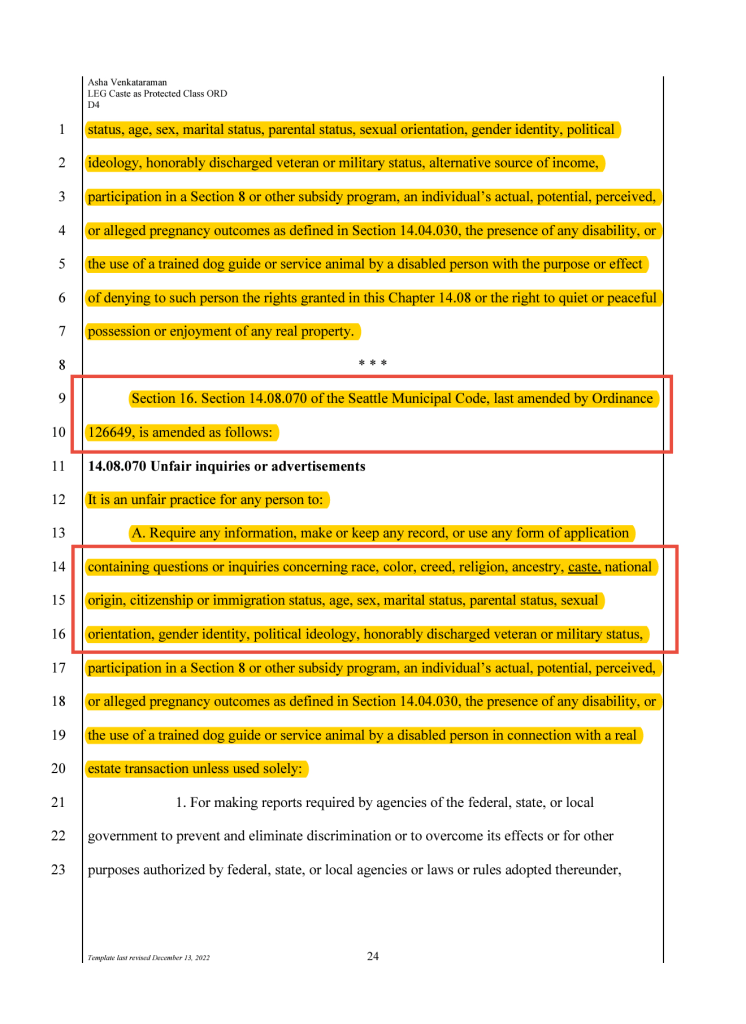
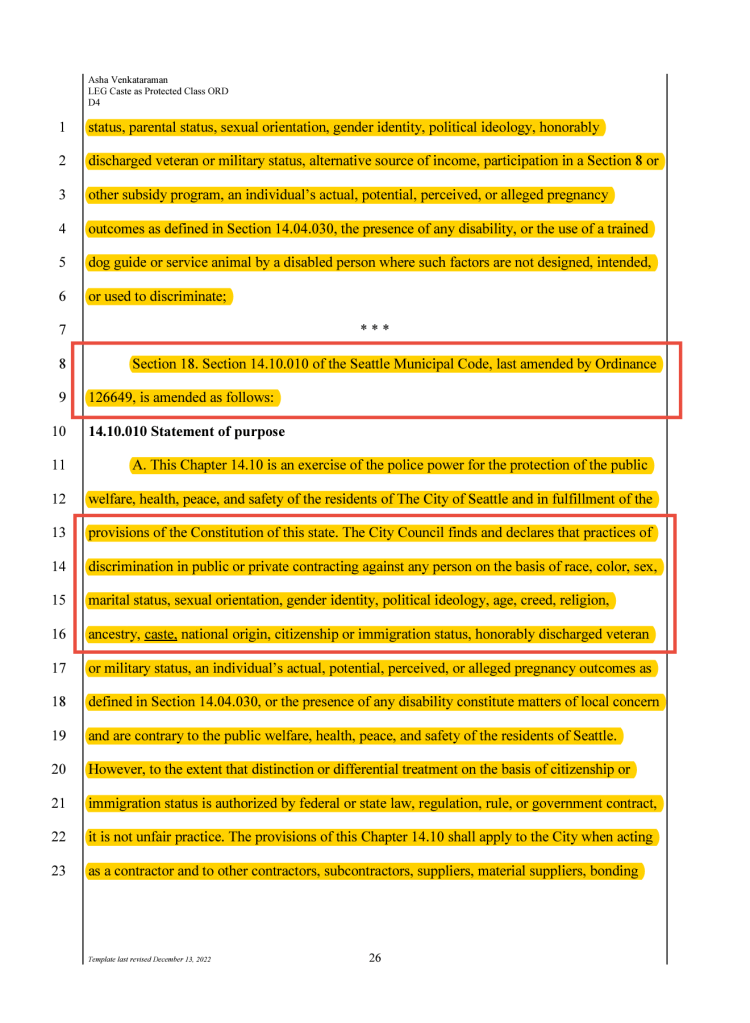
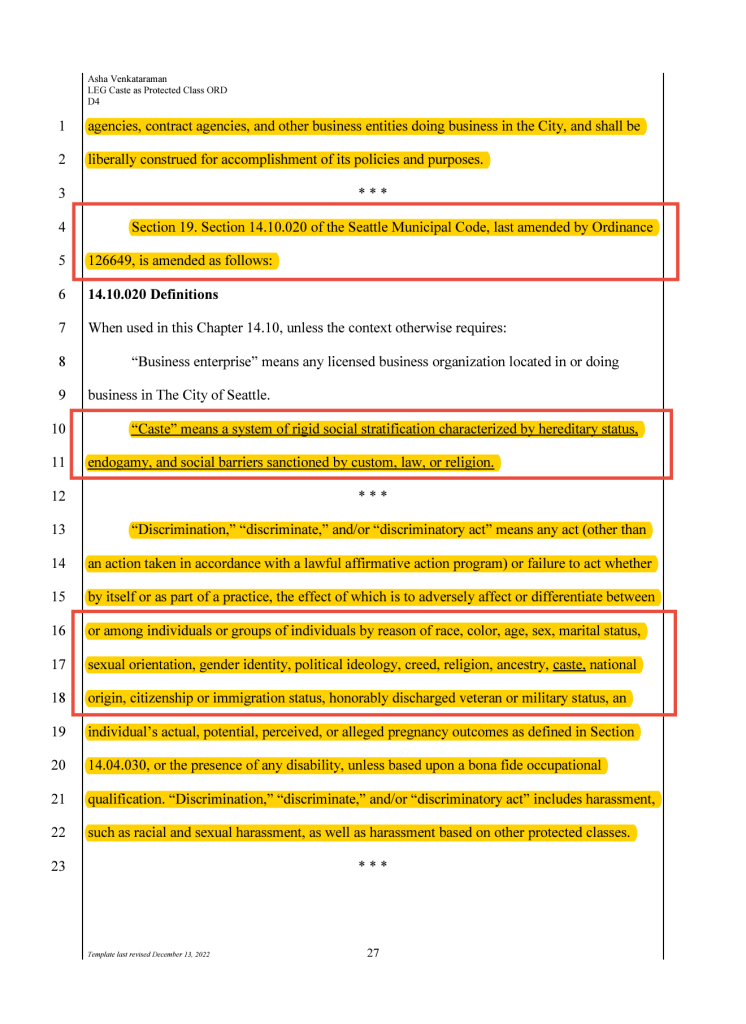
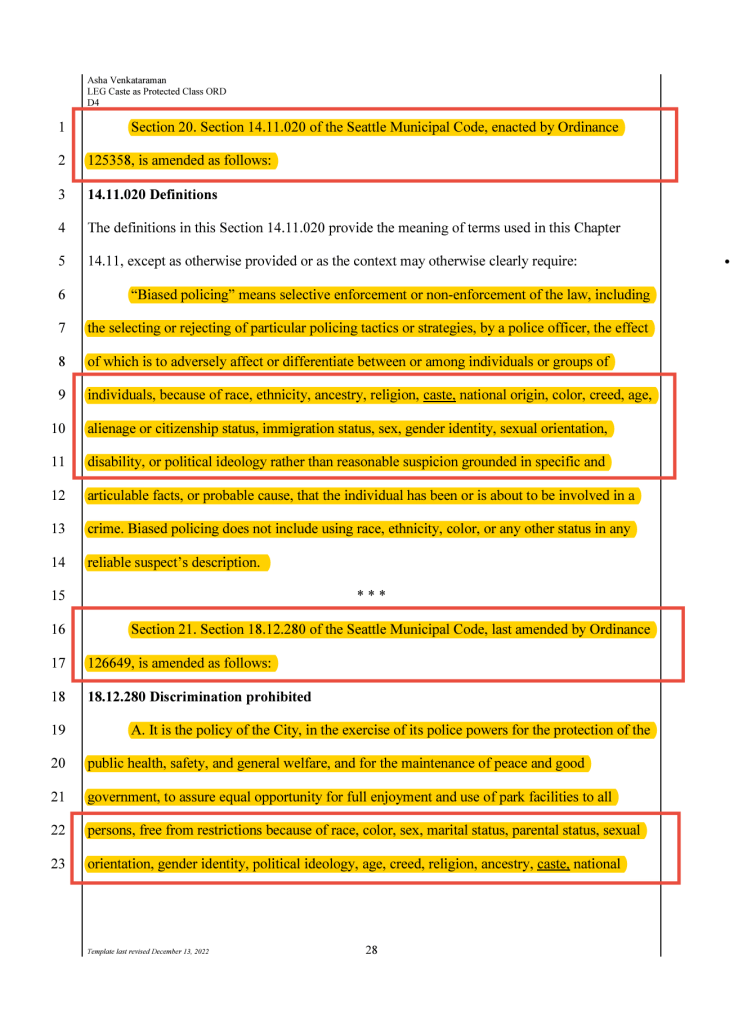
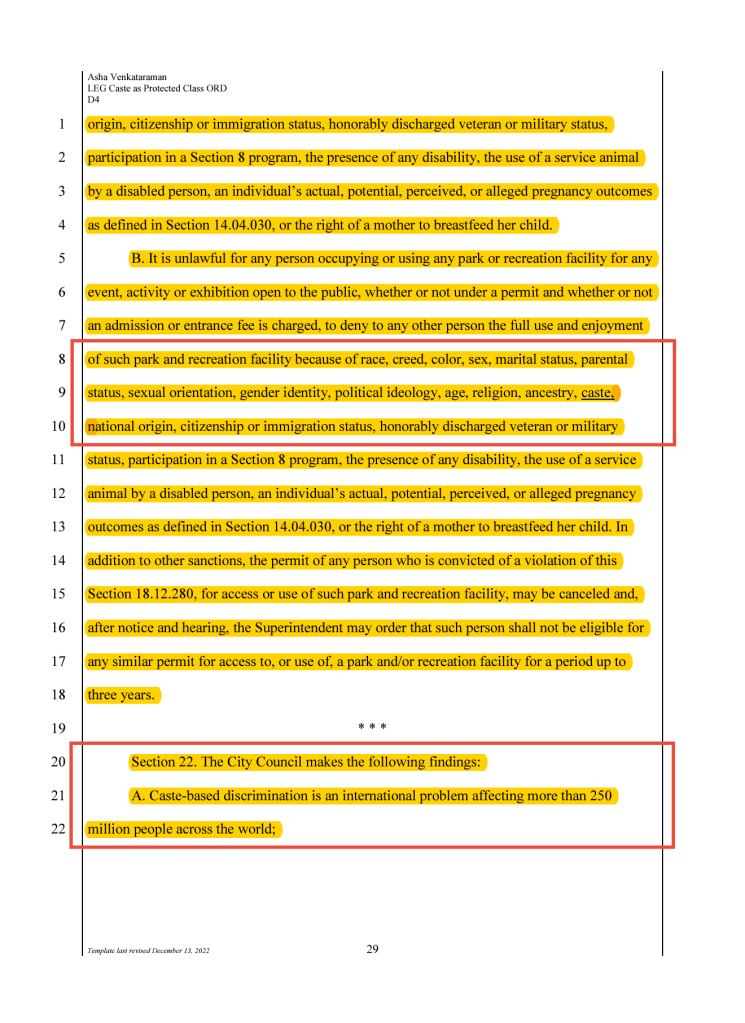
Seattle’s Council Bill (CB) 120511
The relevant parts of Seattle’s Council Bill (CB) 120511, where “caste” is explicitly mentioned, are provided in the following slideshow:
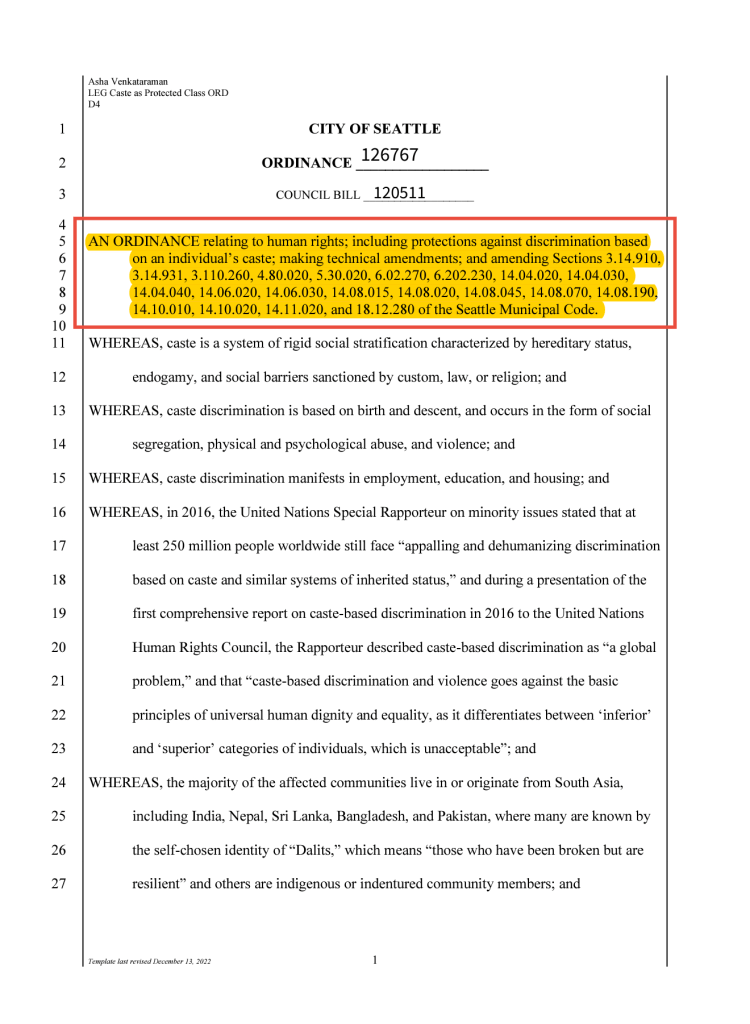
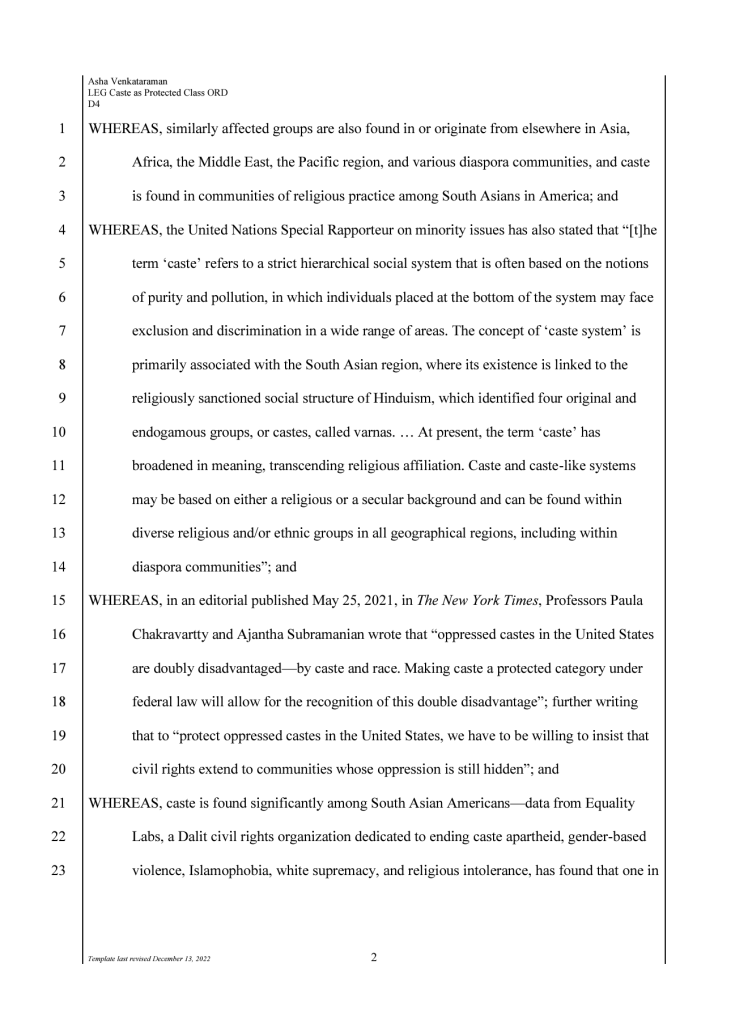
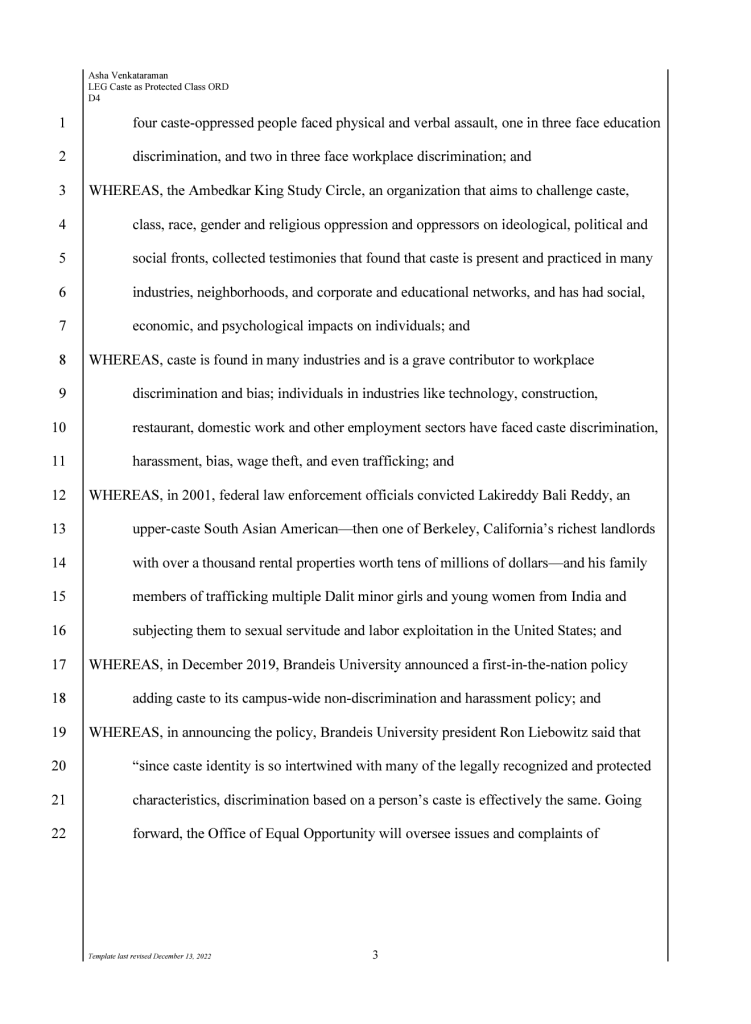
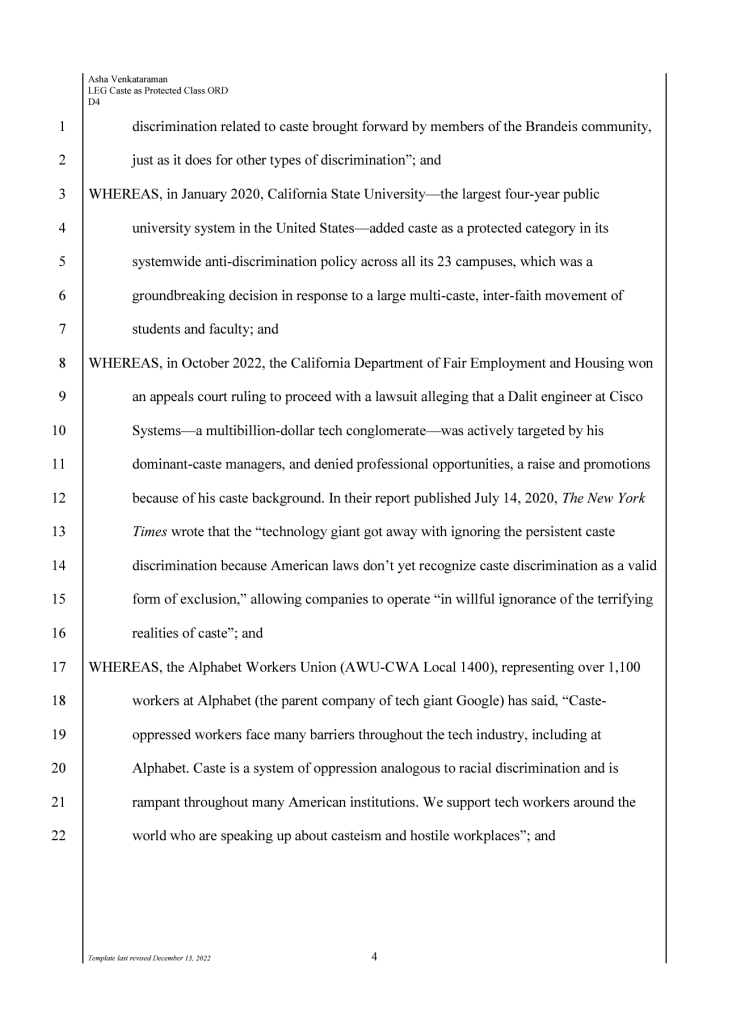









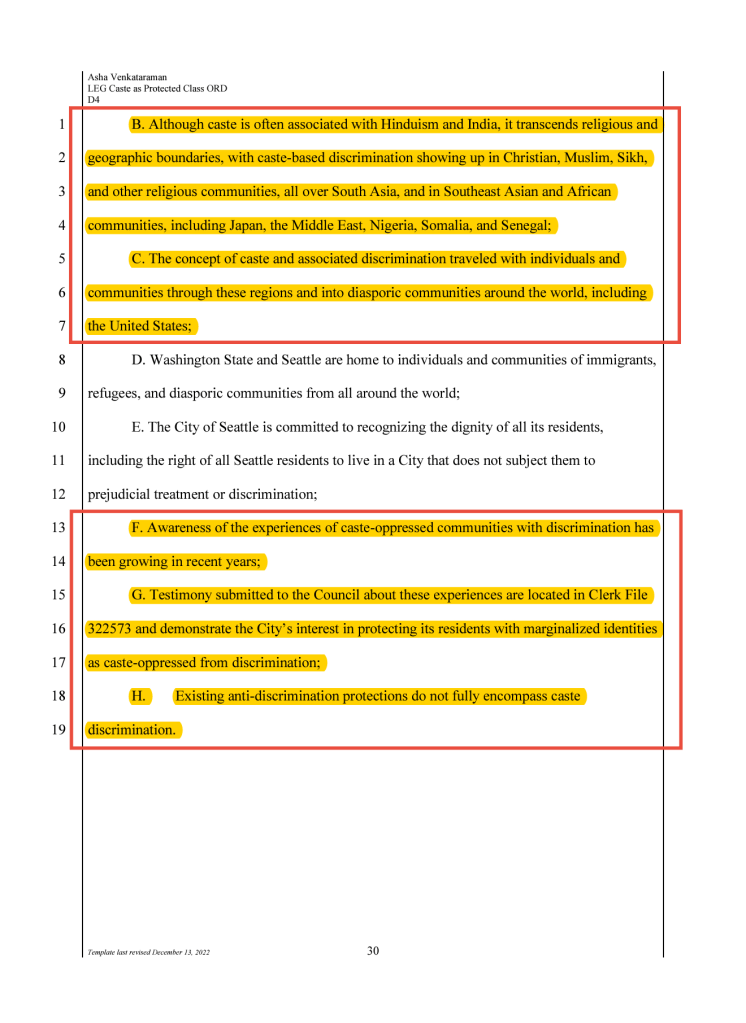
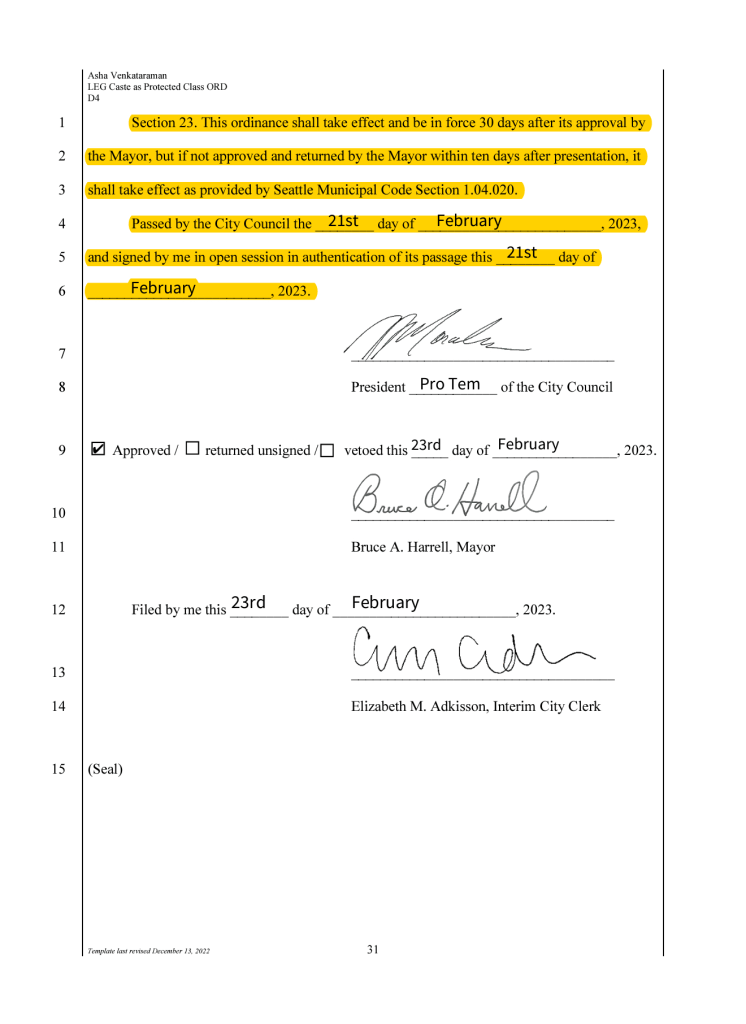
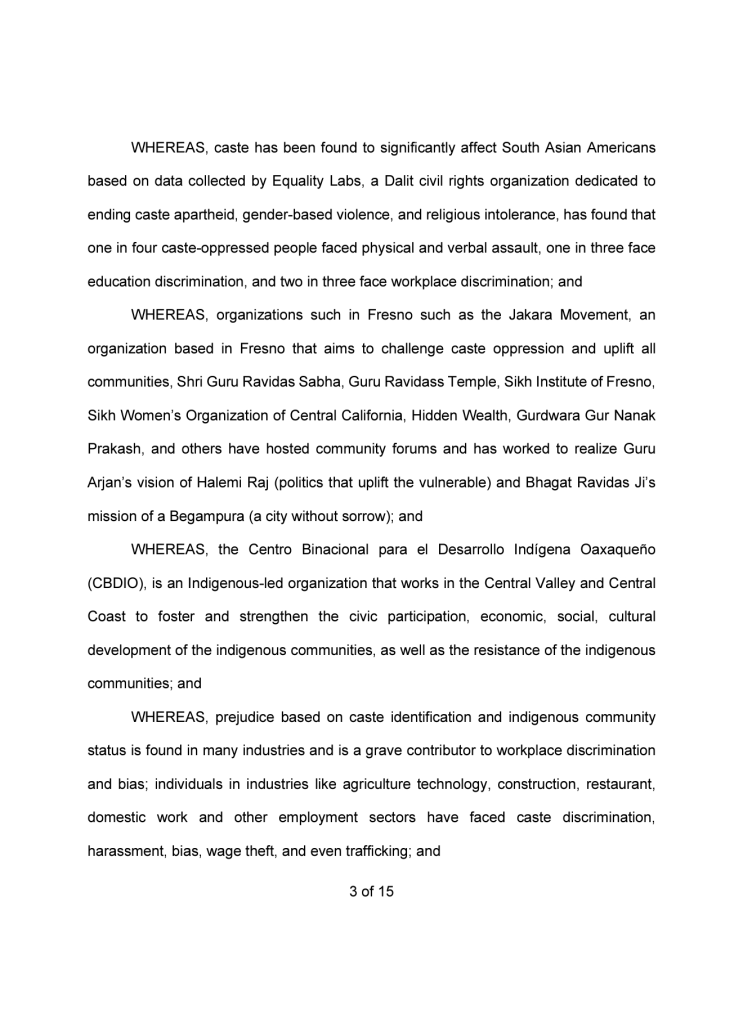
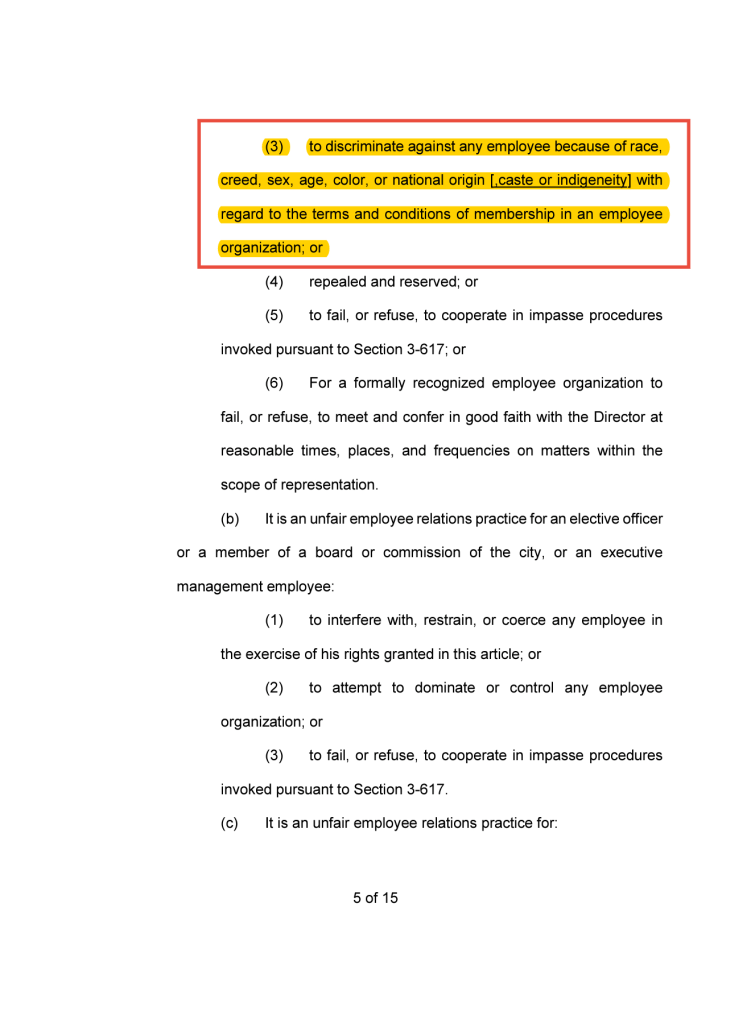
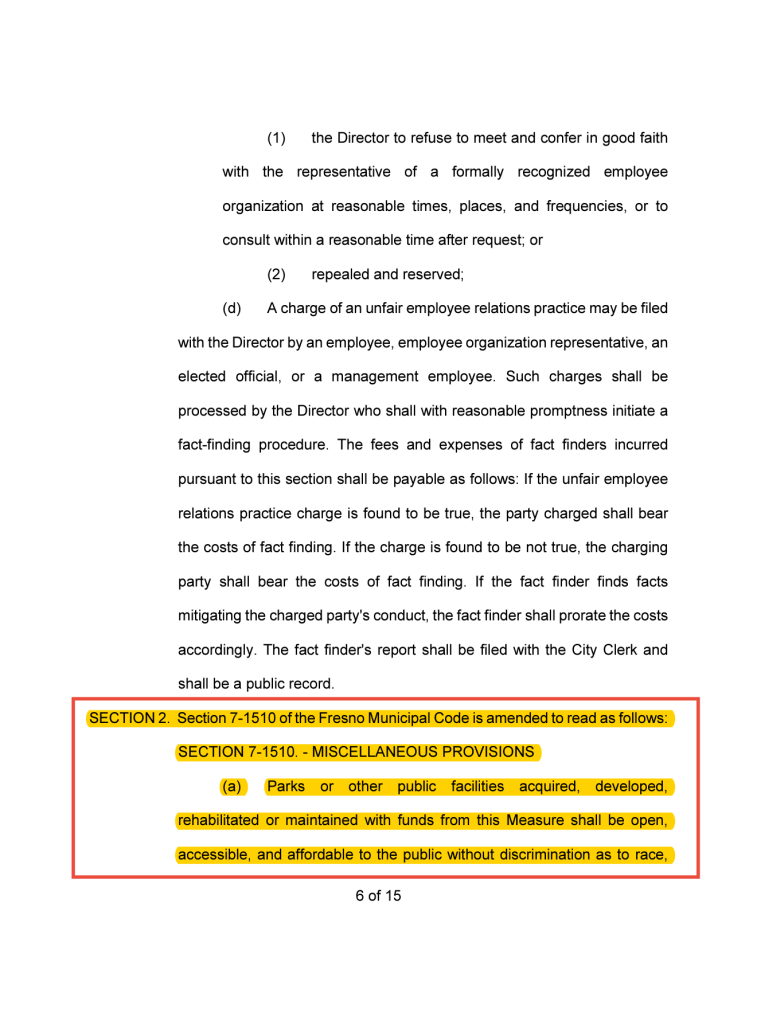
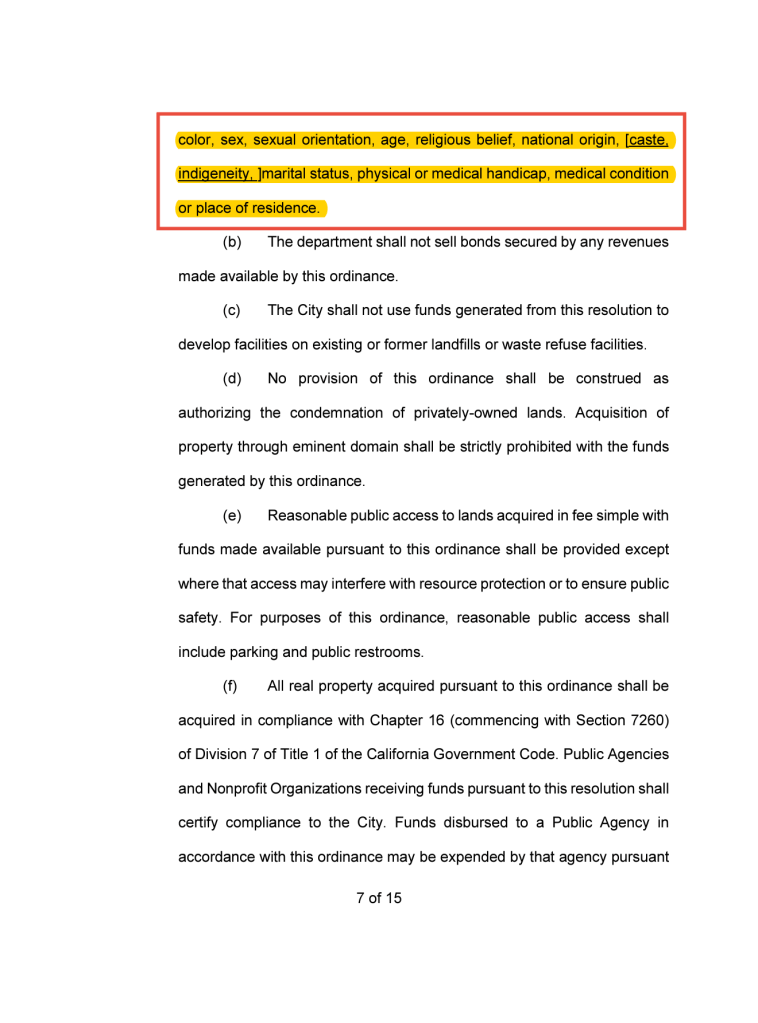
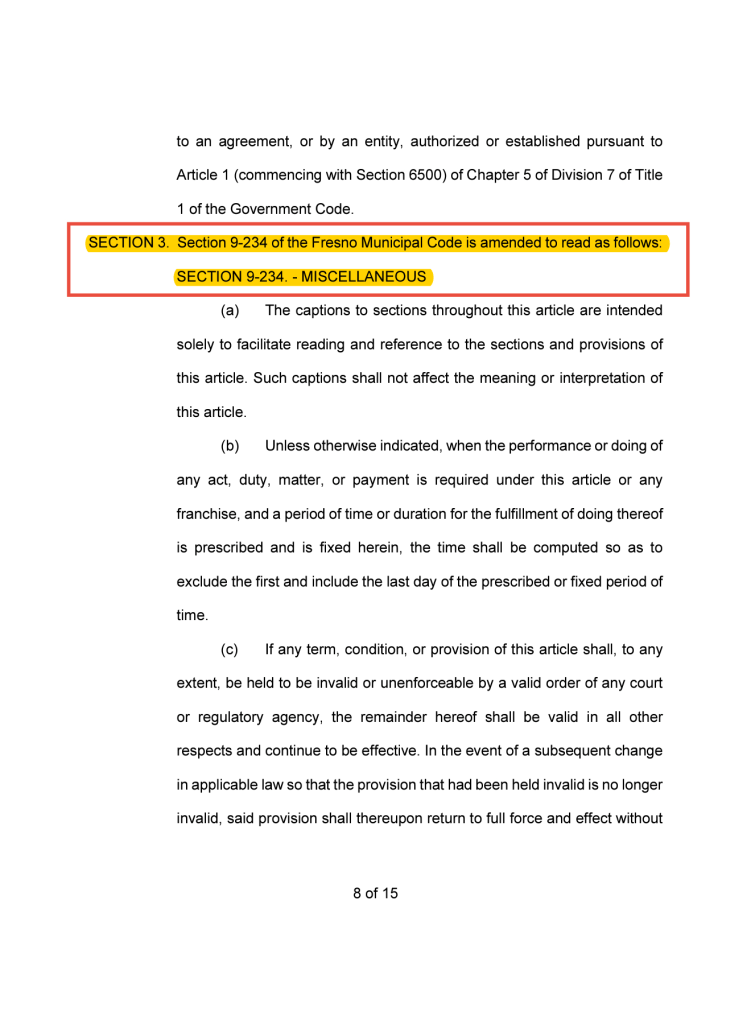
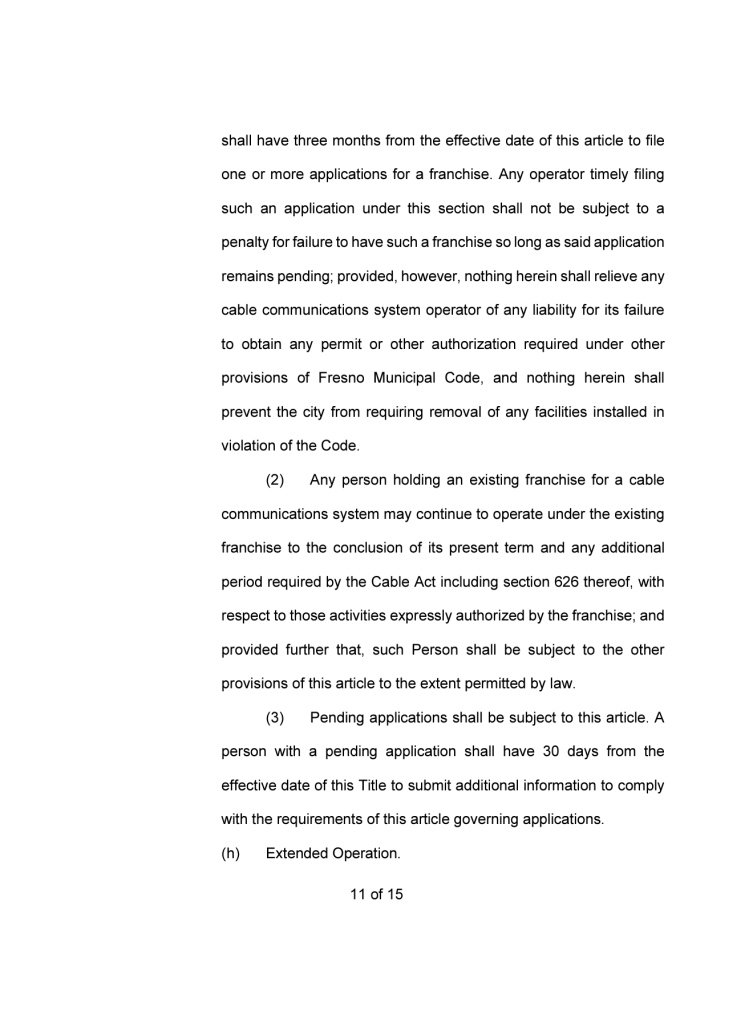
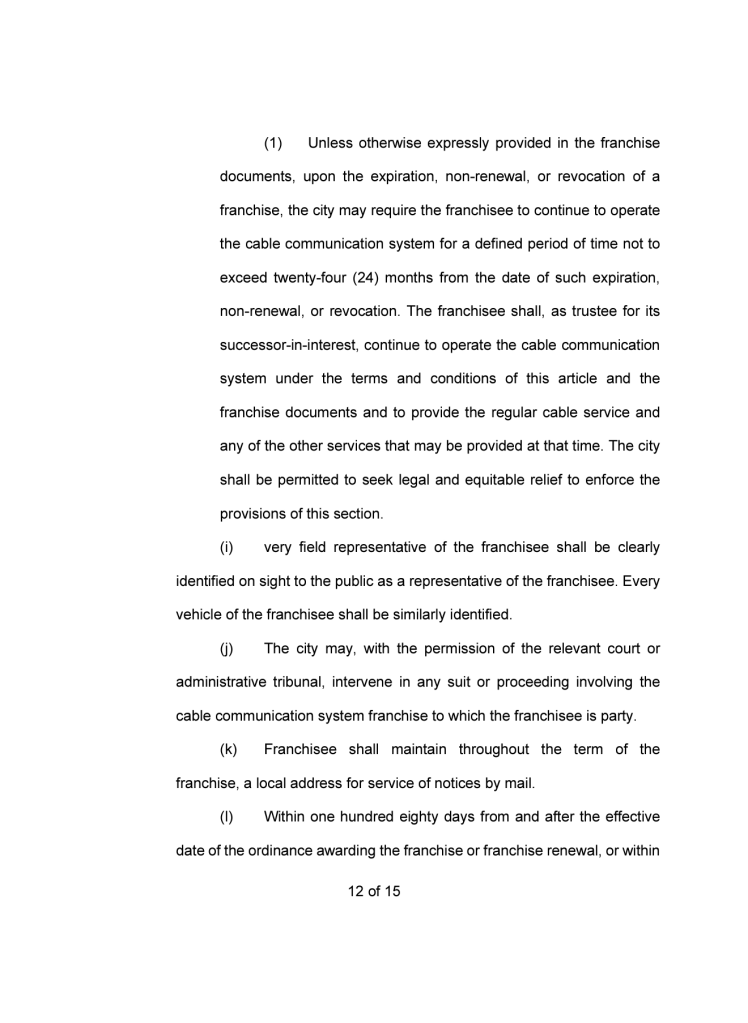
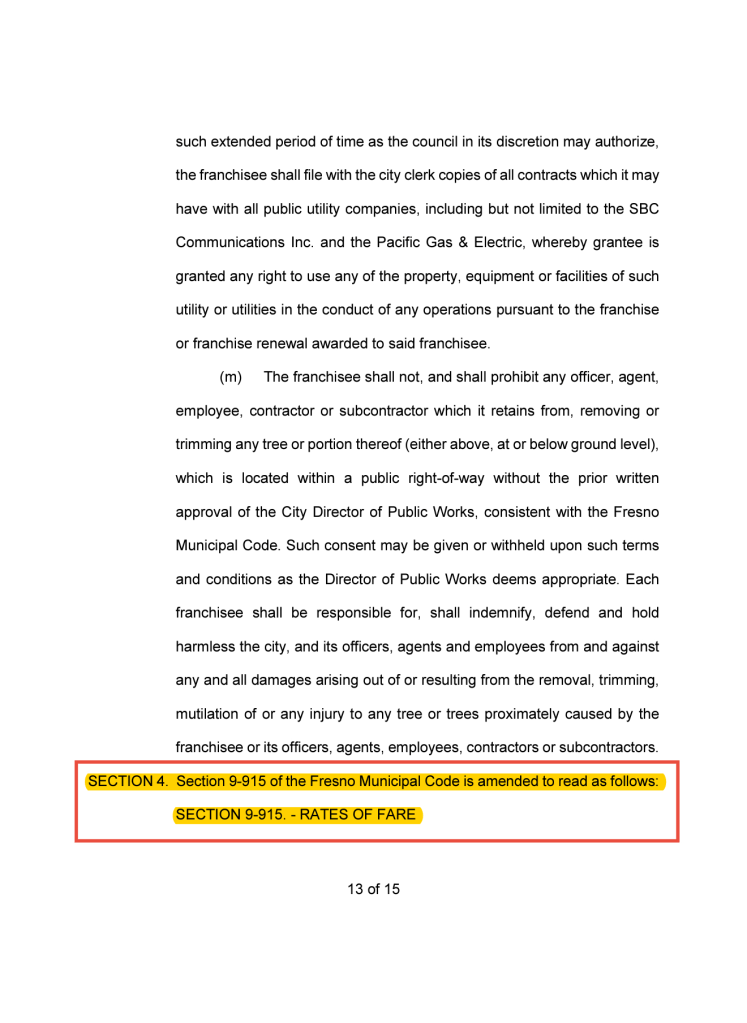
Fresno’s Bill B-27
The relevant parts of Fresno’s Bill B-27, where “caste” is explicitly mentioned, are provided in the following slideshow:
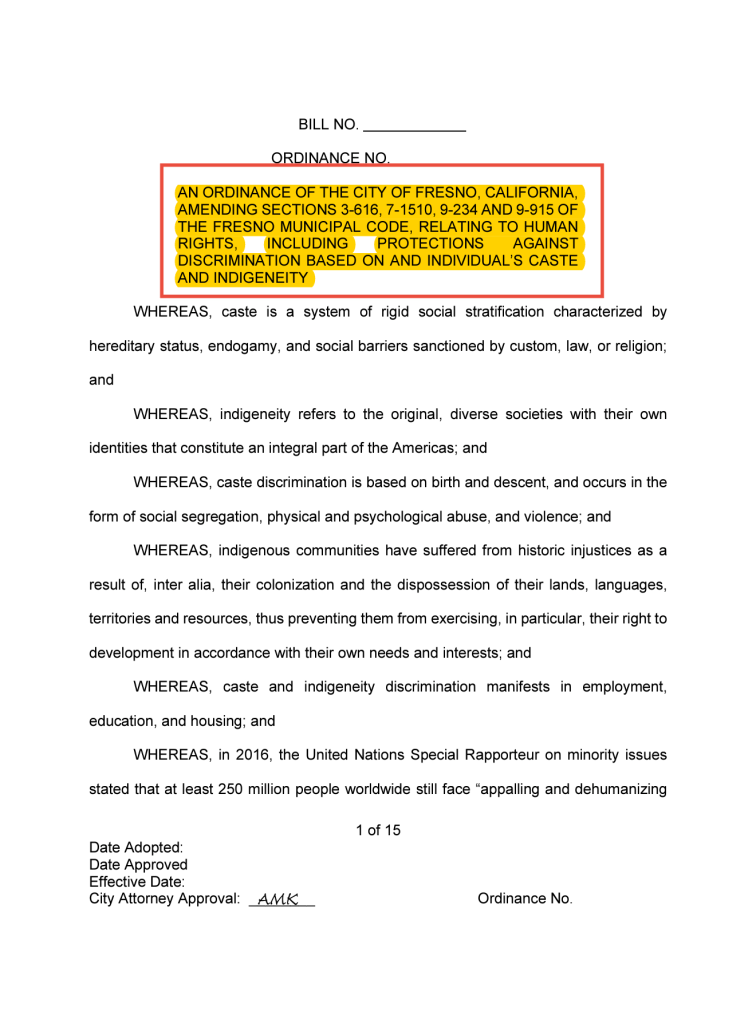
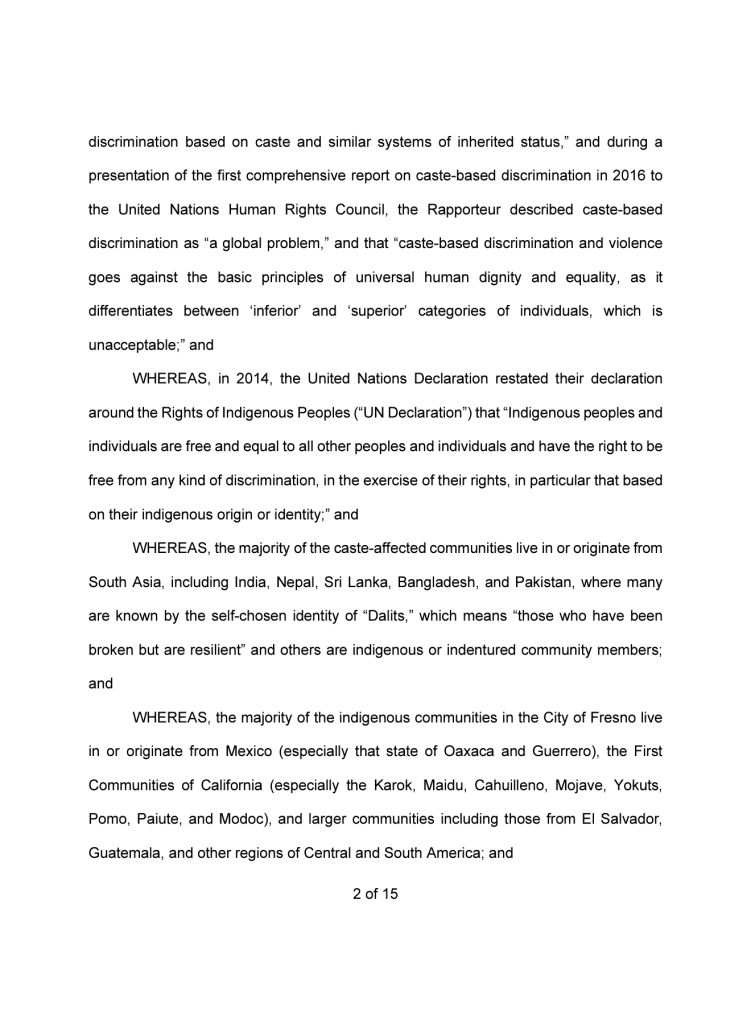



The SB-403 Bill: A Legislative Milestone
In an effort to address caste-based discrimination, the California State Legislature introduced SB-403, a landmark bill aimed at codifying caste as a protected category under civil rights law. The bill’s proponents argued that existing protections against discrimination based on ancestry, race, or religion were insufficient to address caste-related harms.


The primary aim of SB-403 was to explicitly identify and prohibit caste-based discrimination in employment, housing, and education. This specificity, advocates argued, was necessary to ensure that victims of caste discrimination had clear legal recourse.
Critics of the bill, however, claimed that it unfairly targeted Hindus and perpetuated negative stereotypes about the Indian diaspora. Supporters countered this narrative, emphasizing that casteism is a social issue, not a religious one, and called for the Hindu community to lead efforts to dismantle caste-based hierarchies.
The California Governor’s Veto
Despite widespread support from human rights organizations, California’s Governor vetoed SB-403, asserting that the bill was “unnecessary.” He argued that existing anti-discrimination laws, which prohibit discrimination based on “ancestry,” were broad enough to encompass caste-based discrimination. According to the Governor, liberal interpretation of “ancestry” under current statutes already provides a framework to address caste-related grievances.

The Governor’s veto has sparked a contentious debate. Proponents of the bill view the veto as a missed opportunity to unequivocally address caste-based discrimination in legal terms. They argue that failing to explicitly name caste in the law leaves room for ambiguity and limits the ability of marginalized individuals to seek justice.
Conversely, opponents of the bill—and even some neutral observers—argue that the Governor’s rationale reflects a pragmatic approach to governance. By affirming that caste discrimination is already covered under “ancestry,” the state avoids creating unnecessary redundancies in the law while still addressing the issue indirectly.
Broader Implications of Anti-Caste Legislation
The debate over SB-403 is emblematic of larger conversations about how best to combat casteism in the United States. While the bill’s fate in California was a setback for its proponents, it has brought unprecedented attention to caste-based discrimination in the American context.
If caste is explicitly recognized in anti-discrimination laws, it could set a precedent for similar legislation at both state and federal levels. Such recognition would not only empower victims of caste discrimination but also encourage institutions to adopt policies that proactively address the issue.
The controversy surrounding SB-403 also highlights the need for a cultural reckoning within the South Asian diaspora. Acknowledging the existence of caste discrimination and working to dismantle it require collective introspection and action. South Asian Americans, particularly those from privileged caste backgrounds, have a responsibility to challenge the status quo and promote inclusivity within their communities.
As caste discrimination gains recognition as a global issue, the United States has the opportunity to position itself as a leader in human rights advocacy. Legislative action addressing casteism would reinforce America’s commitment to equality and set an example for other nations grappling with similar issues.
Therefore, the advent of anti-caste discrimination legislation in the United States represents a significant step in the global fight for equality. While the veto of SB-403 by California’s Governor was a setback, it has sparked an important dialogue about casteism and its impact on American society. Moving forward, the collective efforts of activists, community leaders, and policymakers will be essential in addressing caste-based discrimination and fostering a more inclusive future.
References
1. Demographics of Indian Americans, U.S. Census Bureau (2022): https://www.census.gov
2. SB-403: Prohibition of Caste-Based Discrimination: https://leginfo.legislature.ca.gov

Leave a comment